
Garbage Chute Maintenance UAE
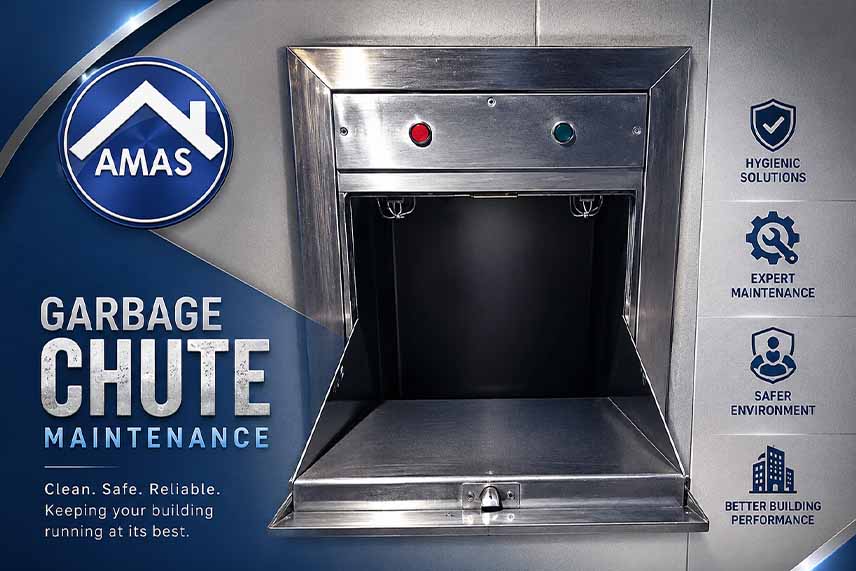
Garbage Chute Maintenance UAE
Garbage Chute Maintenance in the UAE: The Complete Professional Guide
Garbage chute systems are among the most frequently used yet least appreciated building systems in modern residential, commercial, hospitality, healthcare, and mixed-use developments. Every day, thousands of residents, hotel guests, hospital staff, office workers, and maintenance teams rely on these vertical waste disposal systems without giving much thought to the engineering behind them.
However, what appears to be a simple waste disposal shaft is, in reality, a complex mechanical and fire-safety system that requires routine inspection, preventive maintenance, professional cleaning, timely repairs, and compliance with international safety standards.
Without proper Garbage Chute Maintenance, a building can quickly experience unpleasant odours, pest infestations, bacterial growth, fire hazards, equipment failures, resident complaints, costly emergency repairs, and even regulatory compliance issues.
Across the United Arab Emirates including Dubai, Abu Dhabi, Sharjah, Ajman, Ras Al Khaimah, Fujairah, Umm Al Quwain, and Al Ain modern buildings are expected to maintain clean, safe, and fully operational waste disposal systems. Facility managers increasingly recognise that preventive maintenance delivers significantly greater value than reactive repairs, helping extend equipment lifespan while improving hygiene, safety, and operational efficiency.
This comprehensive guide has been developed for:
- Facility Managers
- Property Managers
- Building Owners
- FM Companies
- Hotel Engineers
- Hospital Maintenance Teams
- Real Estate Developers
- Residential Communities
- Commercial Building Operators
- Government Facilities
- Industrial Properties
- Engineering Consultants
Whether you manage a residential tower, luxury hotel, healthcare facility, shopping mall, commercial office building, or industrial property, this guide explains everything you need to know about maintaining a high-performance garbage chute system.
Throughout the UAE, two technical partners AMAS SOLVEX TECHNICAL SERVICES and AL MASAR AL SAHEH BUILDING MAINTENANCE support facility management teams by providing specialised services including garbage chute inspection, preventive maintenance, emergency repairs, deep cleaning, refurbishment, spare parts replacement, and annual maintenance contracts (AMC). Their collaborative approach allows clients across multiple emirates to receive consistent technical support while maintaining high engineering and safety standards.
Rather than viewing maintenance as an expense, leading organisations consider it an investment in building reliability, resident satisfaction, compliance, and long-term asset protection.
Why Garbage Chute Maintenance Matters
A garbage chute operates continuously throughout the year. Unlike many building systems that function only during business hours, waste disposal systems are used around the clock.
Every bag of waste introduces:
- Moisture
- Organic residue
- Grease
- Liquids
- Food waste
- Chemicals
- Bacteria
- Dust
- Plastic debris
- Sharp objects
Without scheduled maintenance, these contaminants gradually accumulate inside the chute, creating conditions that accelerate corrosion, encourage microbial growth, damage moving components, and increase fire risk.
Professional maintenance ensures that every part of the system from intake doors to discharge mechanisms continues operating safely and efficiently.
The Growing Importance of Garbage Chute Maintenance in the UAE
The UAE continues to experience rapid urban development, with thousands of new residential towers, hotels, hospitals, and mixed-use developments being delivered each year.
Modern high-rise buildings depend on efficient vertical waste management systems to support:
- Daily building operations
- Resident convenience
- Health and hygiene
- Fire compartmentation
- Facility management efficiency
- Environmental sustainability
As buildings become taller and more densely occupied, garbage chute systems are subjected to heavier usage, making preventive maintenance increasingly important.
Today's facility managers are expected not only to resolve equipment failures but also to minimise downtime, reduce operational costs, and extend asset life through proactive maintenance strategies.
Health & Hygiene Considerations
Garbage chutes transport waste containing:
- Food residue
- Organic materials
- Packaging waste
- Liquids
- Household waste
- Medical-related waste (where applicable)
These materials create ideal environments for:
- Bacteria
- Fungi
- Mold
- Insects
- Cockroaches
- Rodents
- Odour-causing microorganisms
Without routine Garbage Chute Cleaning and Garbage Chute Sanitization, contamination can spread rapidly throughout the building.
Professional maintenance programmes focus on eliminating these risks before they impact occupants.
Fire Safety Considerations
Garbage chute systems are also critical fire-safety components.
A properly maintained chute helps:
- Reduce vertical fire spread
- Maintain fire compartmentation
- Protect escape routes
- Support life safety systems
- Improve emergency response effectiveness
Routine maintenance includes inspection of:
- Fire-rated intake doors
- Self-closing mechanisms
- Door gaskets
- Latching systems
- Heat damage
- Smoke leakage points
Neglecting these components can compromise the overall fire protection strategy of a building.
Operational Efficiency
A poorly maintained chute creates operational challenges that affect the entire property.
Common consequences include:
- Frequent blockages
- Emergency call-outs
- Resident complaints
- Overflowing waste rooms
- Increased cleaning costs
- Elevator misuse for waste transport
- Higher labour requirements
- Reduced equipment lifespan
Preventive maintenance minimises these issues while ensuring uninterrupted service.
Sustainability & Environmental Responsibility
Modern facility management increasingly emphasises sustainable building operations.
Well-maintained garbage chute systems contribute to sustainability by:
- Reducing waste leakage
- Supporting recycling initiatives
- Improving waste segregation
- Minimising water consumption during cleaning
- Extending equipment lifespan
- Reducing replacement waste
- Lowering maintenance-related emissions
Preventive maintenance aligns with broader environmental goals by reducing unnecessary material replacement and improving resource efficiency.
Quick Facts About Garbage Chute Maintenance
Quick Facts
| Item | Information |
|---|---|
| Primary Function | Safe vertical waste transportation |
| Typical Lifespan | 20–40 years (with proper maintenance) |
| Daily Usage | Hundreds of disposal cycles in busy buildings |
| Recommended Cleaning | Monthly or as required by building usage |
| Inspection Frequency | Quarterly to annually, depending on occupancy |
| Preventive Maintenance | Scheduled throughout the year |
| Fire Doors | Must remain self-closing and fire-rated |
| Major Risk | Fire, odours, bacteria, corrosion, blockages |
| Best Practice | Preventive maintenance with regular inspections |
| Suitable Buildings | Residential, Hotels, Hospitals, Commercial, Industrial |
What is Garbage Chute Maintenance?
Garbage Chute Maintenance is the systematic process of inspecting, cleaning, servicing, repairing, testing, and preserving every component of a building's waste disposal system to ensure safe, hygienic, and reliable operation.
Rather than addressing failures only after they occur, maintenance follows a proactive strategy that identifies wear, contamination, and mechanical issues before they develop into major problems.
A comprehensive maintenance programme typically includes:
- Routine inspections
- Preventive servicing
- Mechanical adjustments
- Lubrication of moving parts
- Cleaning and sanitization
- Odour control
- Fire door testing
- Spare parts replacement
- Corrosion treatment
- Safety inspections
- Performance testing
- Maintenance reporting
The objective is not only to keep the chute operational but also to protect occupants, preserve building assets, and comply with recognised safety standards.
How a Garbage Chute System Works
A garbage chute system is a vertical waste transportation shaft installed inside a building.
Occupants deposit waste through intake doors located on each floor. The waste travels by gravity through a smooth internal shaft and exits at the bottom discharge into a collection container or compactor.
Many modern systems also include:
- Automatic wash-down units
- Odour control devices
- Fire-rated doors
- Stainless steel liners
- Ventilation systems
- Smart monitoring sensors
- Electronic access controls
These components work together to ensure efficient, hygienic, and safe waste disposal.
The Life Cycle of a Garbage Chute System
A well-designed garbage chute progresses through several stages during its operational life:
| Stage | Description |
|---|---|
| Design | System planned to suit building requirements |
| Installation | Components assembled and commissioned |
| Daily Operation | Routine waste disposal by occupants |
| Preventive Maintenance | Scheduled servicing to preserve performance |
| Cleaning & Sanitization | Regular hygiene management |
| Repairs | Correction of wear or failures |
| Refurbishment | Replacement of ageing components |
| Modernisation | Upgrading with improved technologies |
| End-of-Life Replacement | Complete system renewal when required |
With proper preventive maintenance, many systems remain operational for decades while maintaining high standards of safety and hygiene.
Maintenance Objectives
Professional garbage chute maintenance aims to:
- Ensure reliable daily operation
- Protect public health
- Minimise fire risks
- Prevent unpleasant odours
- Reduce pest activity
- Extend equipment lifespan
- Lower long-term maintenance costs
- Improve tenant satisfaction
- Support regulatory compliance
- Preserve the value of the building asset
Complete Anatomy of a Garbage Chute System
Understanding each component of a garbage chute system is essential for effective maintenance, troubleshooting, and long-term asset management. Every part plays a specific role in ensuring waste moves safely, hygienically, and efficiently from each floor to the collection area.
1. Intake Door (Hopper Door)
The intake door is the user-facing access point installed on each floor where occupants deposit waste into the chute. It is one of the most frequently used components and therefore requires regular inspection for proper alignment, self-closing performance, latch integrity, gasket condition, and fire resistance.
2. Internal Shaft
The shaft forms the vertical passage through which waste travels by gravity. Typically constructed from stainless steel, it must remain smooth, corrosion-free, and free from obstructions to prevent blockages and facilitate effective cleaning.
3. Discharge Door
Located at the base of the chute, the discharge door controls the release of waste into the collection container or compactor. It must operate reliably under heavy loads while maintaining a secure seal when closed.
4. Collection Room
Often referred to as the garbage room, this area houses the waste containers or compactors. Proper ventilation, cleanliness, and access control are essential to minimise odours, pests, and contamination.
5. Roof Ventilator
The roof ventilator promotes continuous airflow through the chute, helping to remove odours, moisture, and gases while supporting overall system hygiene.
6. Wash-Down System
Many modern garbage chute systems include integrated wash-down nozzles that distribute cleaning agents and water throughout the shaft. These systems facilitate routine sanitation and help prevent residue build-up.
7. Odour Control Devices
Activated carbon filters, chemical dosing units, ozone generators, or other deodorising technologies may be installed to minimise unpleasant smells and improve indoor air quality.
8. Fire-Rated Doors
Fire-rated intake doors are engineered to limit the spread of smoke and flames through the vertical shaft. Regular testing ensures that hinges, latches, seals, and closing mechanisms remain fully operational.
9. Compactor Connection
In buildings equipped with waste compactors, the chute connects directly to the compaction unit, enabling efficient waste handling and reducing manual intervention.
A garbage chute system consists of numerous interconnected mechanical, structural, hygienic, and safety components. Understanding how each component functions helps facility managers implement more effective maintenance programmes and reduce unexpected failures.
10. Access Panels
Access panels provide maintenance engineers with safe entry points to inspect, clean, and repair the internal chute shaft.
Purpose
- Internal inspection
- Blockage removal
- Cleaning access
- Mechanical repairs
- Camera inspections
Maintenance Requirements
- Check locking mechanisms
- Verify airtight seals
- Inspect hinges
- Replace damaged gaskets
- Ensure secure closure
11. Ventilation System
Every garbage chute requires continuous airflow.
Without proper ventilation:
- Odours accumulate
- Moisture increases
- Mold develops
- Corrosion accelerates
- Waste dries inside the shaft
Professional inspections verify:
- Airflow
- Vent blockage
- Bird protection screens
- Fan operation (where applicable)
- Roof termination condition
12. Fire Dampers
Some buildings incorporate fire dampers to prevent smoke movement through ventilation pathways.
Routine maintenance includes:
- Functional testing
- Spring inspection
- Corrosion checks
- Closure verification
13. Door Closers
Every intake door should automatically close after use.
Maintenance includes checking:
- Closing speed
- Spring tension
- Hydraulic leaks
- Mounting bolts
- Arm alignment
A failed closer creates both hygiene and fire risks.
14. Door Hinges
Hinges operate thousands of times annually.
Typical maintenance includes:
- Lubrication
- Alignment
- Fastener tightening
- Wear inspection
- Replacement when excessive play develops
15. Door Latching Mechanism
The latch ensures the intake door remains securely closed.
Maintenance involves:
- Alignment adjustment
- Lubrication
- Spring testing
- Wear inspection
- Strike plate adjustment
16. Rubber Gaskets
Door seals prevent:
- Odour leakage
- Smoke migration
- Air loss
- Noise transmission
Damaged gaskets should be replaced immediately.
17. Stainless Steel Shaft
Most modern systems utilise stainless steel because it offers:
- Corrosion resistance
- Smooth waste flow
- Easier cleaning
- Longer lifespan
- Better hygiene
Maintenance focuses on:
- Surface condition
- Weld integrity
- Corrosion spots
- Impact damage
18. Bottom Discharge Assembly
The discharge assembly controls waste exiting into:
- Garbage bins
- Rotary drums
- Compactors
Inspection includes:
- Structural integrity
- Alignment
- Leakage
- Door operation
- Frame condition
19. Garbage Compactor Interface
Where compactors are installed, engineers inspect:
- Connection alignment
- Safety switches
- Mounting points
- Mechanical wear
- Waste flow
Poor alignment frequently causes repeated blockages.
20. Electronic Monitoring Systems
Modern smart buildings increasingly integrate:
- Door sensors
- Usage counters
- Maintenance alerts
- Remote diagnostics
- Building Management System (BMS) integration
These technologies support predictive maintenance and reduce unplanned downtime.
21. Safety Sensors
Safety devices monitor:
- Door position
- Compactor status
- Access panel opening
- Maintenance mode
- Equipment faults
These systems improve technician safety during servicing.
22. Wash Down Nozzles
Automatic cleaning systems rely on correctly functioning spray nozzles.
Routine inspection checks for:
- Blockages
- Water pressure
- Spray pattern
- Scale build-up
- Corrosion
23. Chemical Injection Unit
Some advanced cleaning systems automatically inject cleaning chemicals.
Maintenance includes:
- Pump calibration
- Hose inspection
- Leak detection
- Chemical compatibility
- Tank cleaning
24. Drainage System
Cleaning water must drain efficiently.
Inspection covers:
- Drain traps
- Pipe blockages
- Floor gradients
- Water accumulation
- Backflow prevention
25. Odour Neutralisation Equipment
Many premium buildings use dedicated odour control systems including:
- Carbon filtration
- Enzyme treatment
- Misting systems
- Ozone treatment (where appropriate)
- Automatic fragrance systems
26. Support Frames
The entire chute is supported by structural brackets.
Routine inspection checks:
- Corrosion
- Anchor bolts
- Structural movement
- Weld quality
- Load integrity
Types of Garbage Chute Systems
Different buildings require different garbage chute designs. Selecting the right system depends on occupancy, waste volume, hygiene requirements, fire safety considerations, and operational efficiency.
Traditional Garbage Chute Systems
The most common configuration found in residential towers.
Features
- Manual intake doors
- Gravity-fed waste disposal
- Simple mechanical design
- Low operating cost
- Easy maintenance
Best suited for:
- Apartment buildings
- Residential towers
- Staff accommodations
Automatic Garbage Chute Systems
Automatic systems incorporate motorised components and cleaning functions.
Advantages include:
- Reduced manual intervention
- Improved hygiene
- Automatic washing
- Better odour control
- Enhanced safety
Ideal for:
- Luxury developments
- Premium residential projects
- High-rise towers
Smart Garbage Chute Systems
Smart systems integrate digital technologies.
Typical features include:
- IoT sensors
- Maintenance alerts
- Usage analytics
- Remote monitoring
- Predictive maintenance
- BMS integration
These systems help facility managers make data-driven maintenance decisions.
High-Rise Garbage Chute Systems
Designed specifically for towers exceeding approximately 15–20 floors.
Key design considerations:
- Higher waste volumes
- Increased ventilation requirements
- Enhanced fire compartmentation
- Stronger structural support
- Noise reduction
Residential Garbage Chute Systems
Found in:
- Apartment towers
- Residential compounds
- Villas with shared waste systems
- Mixed-use developments
Maintenance priorities:
- Resident safety
- Odour control
- Hygiene
- Quiet operation
Commercial Garbage Chute Systems
Installed in:
- Office buildings
- Shopping centres
- Business parks
Typical characteristics:
- Moderate waste volumes
- Packaging waste
- Flexible servicing schedules
Hotel Garbage Chute Systems
Hotels generate continuous waste from:
- Guest rooms
- Restaurants
- Kitchens
- Housekeeping
- Banquet facilities
Maintenance focuses on:
- Hygiene
- Noise reduction
- Guest comfort
- Odour elimination
- Continuous operation
Hospital Waste Chute Systems
Healthcare environments demand the highest hygiene standards.
Maintenance priorities include:
- Infection control
- Frequent sanitisation
- Odour prevention
- Regulatory compliance
- Reliable operation
Industrial Waste Chute Systems
Industrial facilities often handle:
- Heavy waste
- Packaging materials
- Manufacturing by-products
Maintenance requires:
- Structural inspections
- Heavy-duty repairs
- Wear monitoring
- Reinforced components
Why Garbage Chute Maintenance is Critical
Many building owners underestimate the importance of routine garbage chute maintenance until serious problems emerge. In reality, a well-maintained chute system contributes directly to safety, hygiene, operational efficiency, and long-term cost savings.
1. Protecting Public Health
Garbage contains organic waste that can rapidly become a breeding ground for harmful microorganisms.
Without maintenance, the chute may harbour:
- Bacteria
- Viruses
- Fungi
- Mold
- Insects
- Rodents
Routine cleaning and sanitisation help reduce these risks and promote a healthier indoor environment.
2. Fire Safety
A garbage chute acts as a vertical shaft that can facilitate smoke and fire spread if fire protection features fail.
Professional maintenance ensures:
- Fire-rated doors close correctly
- Gaskets remain intact
- Latching mechanisms function properly
- Fire barriers are maintained
3. Odour Control
Persistent odours are one of the most common resident complaints.
Causes include:
- Organic waste build-up
- Poor ventilation
- Dirty intake doors
- Blocked drainage
- Inadequate cleaning frequency
Preventive maintenance addresses these issues before they become major problems.
4. Hygiene
Routine servicing keeps:
- Intake doors clean
- Internal surfaces sanitised
- Collection rooms hygienic
- Wash-down systems operational
- Waste pathways free from residue
5. Compliance
Many facility management contracts require documented maintenance programmes.
Routine inspections support:
- Building safety policies
- Internal audit requirements
- Insurance expectations
- Fire safety management
- Asset maintenance planning
6. Reducing Long-Term Costs
Preventive maintenance is significantly more economical than emergency repairs.
Early detection helps avoid:
- Major component failures
- Extensive corrosion
- Structural damage
- Large-scale refurbishment
- Emergency call-outs
7. Extending Equipment Life
Regular servicing can substantially extend the operational lifespan of:
- Intake doors
- Door closers
- Stainless steel shafts
- Wash-down systems
- Odour control equipment
- Compactor interfaces
8. Improving Resident Satisfaction
A clean, quiet, and odour-free garbage chute enhances the living experience for occupants and reflects positively on building management.
9. Supporting Facility Management Teams
Preventive maintenance enables facility managers to:
- Reduce reactive maintenance
- Plan budgets more effectively
- Improve KPI performance
- Minimise downtime
- Increase operational reliability
10. Protecting Property Value
Well-maintained building services contribute to the overall quality and market value of a property, while neglected systems can lead to increased complaints, higher operating costs, and accelerated asset deterioration.
Expert Insight
Field Experience: In high-rise residential buildings across the UAE, the most expensive garbage chute repairs are rarely caused by manufacturing defects. They are far more often the result of delayed maintenance, neglected cleaning schedules, worn door components, poor ventilation, and minor issues that were left unresolved until they developed into major failures. A structured preventive maintenance programme consistently delivers better long-term reliability, lower lifecycle costs, and improved occupant satisfaction.
Common Garbage Chute Problems
Even the highest-quality garbage chute system will develop wear over time. The difference between a well-maintained building and one that experiences constant breakdowns is how early these issues are identified and addressed.
The following are the most common problems encountered by maintenance engineers across residential towers, hotels, hospitals, commercial buildings, and mixed-use developments throughout the UAE.
1. Garbage Chute Blockage
Symptoms
- Waste not reaching the collection room
- Garbage backing up inside the chute
- Intake doors difficult to use
- Overflowing rubbish
Common Causes
- Oversized garbage bags
- Furniture or cardboard disposal
- Wet waste sticking to the shaft
- Foreign objects
Risks
- Complete shutdown
- Resident complaints
- Hygiene issues
- Emergency maintenance
Professional Solution
- CCTV inspection
- Safe blockage removal
- Internal cleaning
- Damage assessment
Prevention
- Resident awareness
- Regular inspections
- Monthly cleaning
2. Persistent Bad Odours
Symptoms
- Strong smell on every floor
- Odour entering corridors
- Complaints from tenants
Causes
- Organic waste
- Poor ventilation
- Dirty chute walls
- Drain blockage
Risks
- Unsanitary environment
- Poor indoor air quality
- Negative tenant experience
Solution
- Deep cleaning
- Odour neutralisation
- Vent inspection
- Sanitisation
Prevention
- Scheduled cleaning
- Proper ventilation
- Routine deodorising
3. Fire-Rated Door Failure
Symptoms
- Door remains open
- Loose latch
- Damaged seals
Causes
- Worn hinges
- Broken closer
- Poor adjustment
Risks
- Fire spread
- Smoke migration
- Safety non-compliance
Solution
- Replace closer
- Replace gasket
- Door alignment
- Functional testing
Prevention
- Quarterly fire door inspection
4. Intake Door Misalignment
Symptoms
- Door rubbing
- Difficult closing
- Air leakage
Causes
- Loose hinges
- Structural movement
- Heavy use
Risks
- Odours
- Fire safety compromise
Solution
- Realignment
- Hardware replacement
Prevention
- Routine servicing
5. Broken Door Closer
Symptoms
- Door slams shut
- Door stays open
- Slow closing
Causes
- Hydraulic leakage
- Mechanical wear
Risks
- Injury
- Fire safety failure
Solution
- Replace closer
- Test operation
Prevention
- Annual replacement programme where required
6. Damaged Rubber Gaskets
Symptoms
- Smell escaping
- Smoke leakage
- Visible cracks
Causes
- Age
- Heat
- Cleaning chemicals
Risks
- Poor sealing
- Fire safety reduction
Solution
- Install new fire-rated gasket
Prevention
- Annual inspection
7. Rust Inside the Shaft
Symptoms
- Brown staining
- Rough surface
- Corrosion spots
Causes
- Moisture
- Chemical exposure
- Lack of maintenance
Risks
- Structural deterioration
- Waste obstruction
Solution
- Rust treatment
- Stainless steel repair
- Protective coating
8. Stainless Steel Surface Damage
Symptoms
- Dents
- Scratches
- Deformation
Causes
- Heavy objects
- Incorrect use
Risks
- Waste snagging
- Future corrosion
Solution
- Surface repair
- Panel replacement
9. Roof Vent Blockage
Symptoms
- Poor airflow
- Increased odours
- Moisture
Causes
- Bird nests
- Dust
- Debris
Risks
- Odour build-up
- Condensation
Solution
- Vent cleaning
- Screen replacement
10. Water Leakage
Symptoms
- Wet collection room
- Water stains
- Damp odour
Causes
- Wash-down leaks
- Drain blockage
- Damaged pipework
Risks
- Slip hazards
- Mold
- Corrosion
Solution
- Leak detection
- Pipe repair
- Drain cleaning
11. Wash-Down System Failure
Symptoms
- Poor cleaning
- No water spray
Causes
- Blocked nozzles
- Pump failure
Risks
- Hygiene deterioration
Solution
- Nozzle cleaning
- Pump servicing
Prevention
- Monthly testing
12. Drain Blockage
Symptoms
- Standing water
- Overflow
Causes
- Food waste
- Grease
- Debris
Risks
- Bacterial growth
Solution
- Drain jetting
- Pipe cleaning
13. Compactor Connection Misalignment
Symptoms
- Waste spills
- Frequent jams
Causes
- Equipment movement
- Incorrect installation
Risks
- Collection room contamination
Solution
- Mechanical realignment
14. Excessive Noise
Symptoms
- Loud impact sounds
- Metal banging
Causes
- Loose supports
- Damaged lining
Risks
- Resident complaints
Solution
- Tighten supports
- Replace worn parts
15. Loose Access Panels
Symptoms
- Vibrations
- Air leakage
Solution
- Secure fasteners
- Replace seals
16. Damaged Hopper
Symptoms
- Sharp edges
- Poor waste entry
Solution
- Repair or replace hopper
17. Corroded Support Brackets
Risks
- Structural instability
Solution
- Replace supports
- Structural inspection
18. Loose Anchor Bolts
Risks
- System movement
Solution
- Torque verification
- Replacement
19. Chute Shaft Misalignment
Symptoms
- Frequent waste snagging
Solution
- Engineering assessment
- Realignment
20. Damaged Internal Welds
Risks
- Structural weakness
Solution
- Certified welding repair
21. Pest Infestation
Common Pests
- Cockroaches
- Flies
- Rodents
Solution
- Deep sanitisation
- Pest control
- Seal openings
22. Mold Growth
Causes
- Moisture
- Poor ventilation
Solution
- Anti-fungal treatment
- Drying programme
23. Door Handle Damage
Solution
- Replace handle
- Adjust mechanism
24. Sensor Failure
Modern systems may experience:
- Door sensor faults
- Position sensor failures
- Alarm faults
Professional calibration restores proper operation.
25. Automatic Cleaning Failure
Causes
- PLC faults
- Water supply interruption
- Pump malfunction
Solution
- Electrical diagnosis
- Mechanical repair
26. Electronic Controller Failure
Symptoms
- System alarms
- No automatic functions
Solution
- Controller diagnostics
- Replacement if necessary
27. Excessive Grease Build-Up
Common in:
- Hotels
- Restaurants
- Food courts
Requires specialised degreasing procedures.
28. Waste Room Contamination
Causes
- Poor housekeeping
- Overflow bins
Solution
- Deep cleaning
- Improved collection schedules
29. Fire Door Seal Damage
Requires immediate replacement to maintain compartmentation and smoke resistance.
30. Aging Equipment
Older systems commonly experience:
- Frequent repairs
- Corrosion
- Poor reliability
- Parts obsolescence
Engineers may recommend refurbishment instead of repeated repairs.
Expert Maintenance Advice
More than 70% of emergency garbage chute repairs begin as small maintenance issues that were overlooked during routine inspections. Regular preventive maintenance is the most effective strategy for reducing downtime, repair costs, and safety risks.
Professional Garbage Chute Cleaning Process
Cleaning is far more than washing the inside of the chute. A professional cleaning programme removes contaminants, controls bacteria, eliminates odours, and preserves the condition of the system.
Objectives of Professional Cleaning
A complete cleaning programme aims to:
- Remove waste residue
- Eliminate bacteria
- Reduce odours
- Prevent pest infestation
- Improve hygiene
- Extend equipment life
- Maintain resident satisfaction
- Support preventive maintenance
Types of Garbage Chute Cleaning
| Cleaning Method | Purpose | Recommended Frequency |
|---|---|---|
| Normal Cleaning | Routine hygiene maintenance | Monthly or based on usage |
| Rotating Cleaning | Full internal shaft cleaning using rotating equipment | Periodically for thorough coverage |
| Deep Cleaning | Removes heavy contamination, grease, and built-up deposits | As required for heavily used systems |
| Sanitisation | Reduces bacteria and microorganisms | After cleaning or according to hygiene requirements |
| Odour Treatment | Neutralises persistent smells | When odour issues arise or as part of scheduled maintenance |
1. Normal Garbage Chute Cleaning
Routine cleaning focuses on maintaining a hygienic waste disposal system between major maintenance visits.
Typical Process
- Secure the system.
- Inspect the shaft.
- Remove loose debris.
- Apply approved cleaning solution.
- Wash internal surfaces.
- Rinse thoroughly.
- Clean intake doors.
- Clean collection room.
- Dry the system.
- Restore normal operation.
2. Rotating Cleaning
Rotating cleaning uses specialised rotating spray heads or mechanical cleaning equipment to provide 360-degree coverage of the chute interior.
Advantages
- Cleans the full circumference of the shaft.
- Removes stubborn deposits.
- Reaches difficult areas.
- Improves hygiene consistency.
- Reduces manual intervention.
This method is particularly effective in high-rise residential towers, hotels, and hospitals with heavy daily usage.
3. Deep Cleaning
Deep cleaning is recommended when routine cleaning is no longer sufficient.
Typical situations include:
- Long periods without maintenance
- Heavy grease accumulation
- Persistent odours
- Mold growth
- High-occupancy buildings
- Post-renovation contamination
A professional cleaning programme should not only improve appearance but also eliminate bacteria, reduce odours, protect equipment, and extend the service life of the entire garbage chute system.
4. Garbage Chute Disinfection & Sanitization
Cleaning removes visible dirt and waste residue, while sanitization targets microorganisms that are invisible to the naked eye.
Professional sanitization is especially important in:
- Residential towers
- Hotels
- Hospitals
- Healthcare facilities
- Student accommodation
- Staff accommodation
- Shopping malls
- Mixed-use developments
Typical Sanitization Process
- Pre-inspection
- Removal of waste residue
- Deep cleaning of the shaft
- Application of approved disinfectant
- Contact time according to manufacturer recommendations
- Cleaning of intake doors
- Cleaning of discharge doors
- Sanitization of the garbage room
- Final inspection
- Documentation
Benefits
- Reduces bacteria
- Helps control viruses
- Removes organic contamination
- Improves hygiene
- Reduces unpleasant smells
- Supports healthier indoor environments
5. Odour Removal Process
One of the most common complaints from residents is unpleasant smells escaping from garbage chute intake doors.
Professional odour removal addresses the root cause rather than masking the smell.
Common Sources of Odours
- Organic waste
- Food residue
- Liquids
- Grease
- Mold
- Standing water
- Poor ventilation
- Dirty garbage rooms
Professional Odour Control Methods
- Deep cleaning
- Ventilation inspection
- Drain cleaning
- Enzyme treatment
- Activated carbon filtration
- Neutralising chemicals
- Regular wash-down programmes
Expert Tip
If unpleasant odours return within a few days of cleaning, the underlying issue is often inadequate ventilation, damaged door seals, poor drainage, or hidden organic build-up rather than the cleaning process itself.
6. Bacteria & Infection Control
Waste contains microorganisms that multiply rapidly in warm and humid environments.
Routine maintenance helps minimise:
- Bacteria
- Mold
- Fungus
- Biofilm
- Organic contamination
Professional maintenance programmes reduce the risk of microbial growth through:
- Regular cleaning
- Scheduled sanitization
- Moisture control
- Proper ventilation
- Prompt repair of leaks
Recommended Garbage Chute Cleaning Schedule
The ideal cleaning frequency depends on the type of building, occupancy, and waste volume.
| Building Type | Recommended Cleaning Frequency |
|---|---|
| Residential Towers | Monthly |
| Luxury Residential Buildings | Every 2–4 weeks |
| Hotels | Every 2–4 weeks |
| Hospitals | Weekly to bi-weekly, depending on operational requirements |
| Shopping Malls | Monthly or more frequently during peak periods |
| Commercial Buildings | Monthly |
| Mixed-Use Developments | Every 2–4 weeks |
| Staff Accommodation | Every 2–4 weeks |
| Industrial Facilities | Based on waste type and operational demands |
Engineering Note: Cleaning frequency should always be adjusted based on actual usage, occupancy levels, and inspection findings rather than following a fixed schedule alone.
Garbage Chute Preventive Maintenance Checklist
Preventive maintenance is the most effective strategy for reducing emergency breakdowns, extending equipment life, and maintaining compliance.
Daily Checklist
Facility staff should visually inspect the system each day.
Daily Tasks
- Check intake doors
- Verify doors close properly
- Look for visible damage
- Remove waste around doors
- Inspect the garbage room
- Check for leaks
- Report unusual noises
- Confirm waste collection is normal
- Identify unpleasant odours
- Record observations
Weekly Checklist
Weekly inspections focus on early signs of wear.
Weekly Tasks
- Inspect hinges
- Check door latches
- Test self-closing mechanisms
- Clean intake doors
- Inspect door seals
- Check access panels
- Verify ventilation openings are clear
- Inspect collection room cleanliness
- Remove debris
- Update maintenance records
Monthly Preventive Maintenance
A qualified technician should perform a comprehensive service.
Monthly Tasks
- Internal shaft inspection
- Door alignment adjustment
- Lubricate hinges
- Lubricate latches
- Check stainless steel surfaces
- Inspect wash-down equipment
- Test odour control devices
- Inspect roof ventilation
- Tighten loose fasteners
- Remove corrosion
- Deep clean intake doors
- Inspect discharge assembly
Quarterly Maintenance
Quarterly servicing should include more detailed mechanical and safety inspections.
Quarterly Tasks
- Fire-rated door testing
- Gasket inspection
- Structural inspection
- Door closer testing
- Ventilation performance assessment
- Access panel inspection
- Drain inspection
- Support bracket inspection
- Mechanical adjustments
- Operational testing
Biannual Maintenance
Every six months, engineers should perform a more comprehensive evaluation.
Biannual Tasks
- Full shaft inspection
- Corrosion assessment
- Deep sanitization
- Wash-down system service
- Roof vent inspection
- Compactor interface inspection
- Replace worn seals
- Replace worn hardware where required
- Update maintenance records
Annual Preventive Maintenance
Annual maintenance is the most detailed inspection of the year.
Annual Activities
- Complete engineering inspection
- Performance evaluation
- Structural assessment
- Fire safety review
- Full operational testing
- Door replacement where necessary
- Spare parts assessment
- Maintenance strategy review
- Lifecycle evaluation
- Recommendations for refurbishment or upgrades
Preventive Maintenance Summary
| Frequency | Primary Objective |
|---|---|
| Daily | Identify obvious issues |
| Weekly | Detect early wear |
| Monthly | Routine servicing |
| Quarterly | Mechanical & fire safety inspections |
| Biannual | Major preventative servicing |
| Annual | Comprehensive engineering assessment |
Professional Garbage Chute Inspection Checklist
Inspection is far more comprehensive than a visual check. A structured inspection identifies hidden defects before they become operational failures.
Step 1 – General Condition Assessment
Inspect:
- Overall cleanliness
- Visible corrosion
- Structural condition
- Mechanical damage
- Signs of misuse
Step 2 – Intake Door Inspection
Check each floor for:
- Door alignment
- Closing action
- Latching performance
- Handle condition
- Hinges
- Rubber gaskets
- Fire-rating labels
- Damage to frames
Step 3 – Internal Shaft Inspection
Inspect for:
- Corrosion
- Dents
- Waste build-up
- Sharp edges
- Weld quality
- Surface condition
- Moisture
- Evidence of pests
Where direct visual access is limited, CCTV inspection equipment can provide a safe and accurate assessment.
Step 4 – Roof Ventilation Inspection
Verify:
- Vent is unobstructed
- Bird guards are intact
- Airflow is adequate
- No corrosion
- Secure mounting
Step 5 – Discharge Assembly Inspection
Inspect:
- Bottom discharge door
- Alignment
- Structural integrity
- Mechanical operation
- Safety clearances
Step 6 – Collection Room Inspection
Review:
- Housekeeping standards
- Drainage
- Ventilation
- Waste container condition
- Pest activity
- Lighting
- Access control
Step 7 – Wash-Down System Inspection
Inspect:
- Spray nozzles
- Water pressure
- Valves
- Hoses
- Pumps
- Chemical dosing equipment
- Drainage performance
Step 8 – Fire Safety Inspection
Confirm:
- Fire-rated doors operate correctly
- Self-closing mechanisms function smoothly
- Smoke seals remain intact
- No unauthorised modifications
- Access panels are secure
Step 9 – Structural Inspection
Assess:
- Support brackets
- Anchor bolts
- Shaft stability
- Corrosion
- Welds
- Building movement affecting alignment
Step 10 – Operational Testing
A complete operational test should verify:
- Door operation
- Noise levels
- Waste flow
- Odour control
- Wash-down performance
- Mechanical reliability
- Safety device operation
Inspection Documentation
Every professional inspection should conclude with a written report that includes:
- Inspection date
- Building details
- Engineer's observations
- Photographs (where appropriate)
- Defects identified
- Risk assessment
- Recommended corrective actions
- Priority level (Critical / High / Medium / Low)
- Suggested maintenance schedule
- Confirmation of completed work
Comprehensive records help facility managers plan budgets, demonstrate compliance, and monitor the long-term condition of the garbage chute system.
Expert Insight
Buildings that maintain documented inspection reports alongside preventive maintenance schedules are generally better positioned to reduce unplanned downtime, extend equipment lifespan, and make informed decisions about repairs, refurbishment, or replacement.
Complete Garbage Chute Repair Guide
Even with a well-planned preventive maintenance programme, garbage chute systems will occasionally require repairs due to normal wear, accidental damage, heavy usage, or ageing components. Prompt repairs not only restore functionality but also prevent small defects from developing into major failures that can affect the entire building.
Professional repair work should always begin with a detailed inspection to identify the root cause rather than simply addressing the visible symptom.
The Professional Repair Process
A systematic repair approach helps ensure long-term reliability and minimises repeat failures.
| Step | Activity | Purpose |
|---|---|---|
| 1 | Initial Inspection | Identify the root cause of the fault |
| 2 | Risk Assessment | Ensure safe access and operation |
| 3 | Fault Diagnosis | Evaluate mechanical, structural, and hygiene issues |
| 4 | Repair Planning | Determine required labour and spare parts |
| 5 | Component Repair or Replacement | Restore system performance |
| 6 | Functional Testing | Verify correct operation |
| 7 | Cleaning & Adjustment | Prepare the system for normal use |
| 8 | Maintenance Report | Document completed work and recommendations |
Emergency Garbage Chute Repairs
Certain faults require immediate attention because they affect safety, hygiene, or the building's daily operation.
Situations Requiring Emergency Response
- Complete chute blockage
- Fire-rated door not closing
- Intake door detached from its frame
- Major water leakage
- Structural damage
- Discharge door failure
- Waste overflowing into corridors
- Compactor interface malfunction
- Strong odours indicating system failure
- Safety hazards affecting occupants
Emergency Repair Objectives
- Restore safe operation
- Minimise downtime
- Protect occupants
- Prevent secondary damage
- Maintain building operations
Mechanical Repairs
Mechanical components experience continuous use and naturally wear over time.
Typical repairs include:
- Door closer replacement
- Hinge replacement
- Latch adjustment
- Lock replacement
- Handle replacement
- Spring replacement
- Support bracket repairs
- Frame alignment
- Fastener replacement
- Structural reinforcement
Routine servicing often identifies these issues before they lead to unexpected failures.
Garbage Chute Door Repair
The intake door is one of the most heavily used components in the system.
Common Door Problems
- Door does not close fully
- Door sticks
- Broken hinges
- Damaged handle
- Loose frame
- Worn latch
- Missing gasket
- Fire-rating damage
- Rust
- Physical impact damage
Professional Repair Process
- Inspect the frame
- Check hinge alignment
- Inspect the closer
- Replace worn hardware
- Install new seals where necessary
- Test self-closing action
- Verify fire-rating integrity
- Confirm smooth operation
Garbage Chute Fire-Rated Door Repair
Fire-rated doors require specialised attention because they form part of the building's passive fire protection strategy.
Professional servicing includes:
- Fire label verification
- Hinge inspection
- Self-closing test
- Smoke seal inspection
- Door alignment
- Frame inspection
- Latch adjustment
- Hardware replacement where required
Any replacement components should be compatible with the door's fire-rating requirements.
Garbage Chute Intake Door Repair
An intake door should operate smoothly with minimal effort.
Engineers typically inspect:
- Handle
- Door closer
- Hinges
- Frame
- Gasket
- Latch
- Surface condition
- Corrosion
- Fasteners
If repair is no longer practical, a full door replacement may provide a more reliable long-term solution.
Garbage Chute Hopper Replacement
The hopper guides waste into the shaft while reducing the likelihood of spills and obstructions.
Reasons for Replacement
- Severe corrosion
- Structural cracks
- Impact damage
- Deformation
- Excessive wear
- Hygiene concerns
Replacing a damaged hopper helps improve waste flow and reduces the risk of recurring blockages.
Garbage Chute Parts Replacement
Replacing worn components at the appropriate time is one of the most cost-effective maintenance strategies.
Frequently Replaced Parts
- Door closers
- Hinges
- Handles
- Rubber gaskets
- Latches
- Locks
- Springs
- Support brackets
- Anchor bolts
- Spray nozzles
- Drain fittings
- Vent screens
- Sensors
- Door frames
- Stainless steel panels
Using high-quality replacement parts helps maintain system reliability and extend service life.
Corrosion Treatment
Corrosion is one of the leading causes of long-term deterioration, particularly in coastal environments where humidity and airborne salts accelerate material degradation.
Professional Treatment Process
- Identify affected areas
- Remove corrosion
- Assess structural integrity
- Repair or replace damaged sections
- Apply protective treatment where appropriate
- Inspect surrounding components
Early intervention can significantly reduce refurbishment costs.
Alignment Correction
Misalignment often develops gradually through frequent use, building movement, or hardware wear.
Signs include:
- Doors rubbing against frames
- Poor latching
- Increased operating force
- Air leakage
- Noise during operation
Professional adjustment restores smooth operation and helps protect adjoining components from unnecessary wear.
Garbage Chute Refurbishment
When a system reaches the later stages of its lifecycle, refurbishment may be more economical than complete replacement.
Typical Refurbishment Scope
- Replace intake doors
- Install new fire-rated hardware
- Replace worn gaskets
- Upgrade door closers
- Repair stainless steel shaft sections
- Replace wash-down equipment
- Upgrade odour control systems
- Install modern sensors
- Improve ventilation
- Repaint support structures where appropriate
A refurbishment programme can extend the operational life of a chute system while improving safety and reliability.
Garbage Chute Spare Parts Guide
Understanding the purpose of each spare part helps facility managers make informed maintenance decisions and plan replacement schedules.
| Spare Part | Function | Typical Replacement Trigger |
|---|---|---|
| Intake Door | Waste disposal access | Physical damage or failed fire-rating |
| Fire-Rated Door | Fire compartmentation | Failed inspection or severe damage |
| Hopper | Guides waste into the shaft | Corrosion or deformation |
| Door Closer | Automatic door closing | Oil leakage or weak closing action |
| Hinges | Door movement | Excessive wear or corrosion |
| Latch Assembly | Secure door closure | Failure to latch properly |
| Handle | User operation | Breakage or excessive wear |
| Rubber Gasket | Air and smoke sealing | Cracking or loss of elasticity |
| Stainless Steel Panels | Smooth waste flow | Structural damage |
| Spray Nozzles | Wash-down cleaning | Blockage or wear |
| Vent Screens | Protect ventilation openings | Damage or obstruction |
| Drain Components | Remove cleaning water | Leakage or blockage |
| Support Brackets | Structural support | Corrosion or movement |
| Anchor Bolts | Secure the system | Corrosion or loosening |
| Sensors | Monitoring and automation | Faulty readings or failure |
OEM vs Compatible Spare Parts
Choosing replacement parts should consider quality, compatibility, and long-term performance.
| OEM Parts | High-Quality Compatible Parts |
|---|---|
| Manufactured to original specifications | Produced to meet equivalent technical requirements |
| Reliable fit and performance | Cost-effective when sourced from reputable manufacturers |
| Consistent quality | Suitable where compatibility has been verified |
| Often preferred for critical components | Appropriate for selected non-critical applications |
For safety-related items such as fire-rated doors and self-closing hardware, replacement parts should always meet the applicable performance requirements.
25 Signs Your Garbage Chute Needs Maintenance
Early identification of warning signs helps prevent costly repairs and operational disruptions.
Structural & Mechanical Warning Signs
- Intake door does not close completely
- Door slams shut
- Door remains open
- Door rubs against the frame
- Broken handle
- Loose hinges
- Rust on metal surfaces
- Cracked welds
- Loose support brackets
- Vibrations during operation
Hygiene Warning Signs
- Persistent unpleasant odours
- Mold around intake doors
- Water leakage
- Standing water in the collection room
- Visible waste residue
- Frequent insect activity
- Rodent evidence
- Grease accumulation
Operational Warning Signs
- Repeated blockages
- Waste not reaching the collection room
- Excessive operating noise
- Wash-down system not functioning
- Ventilation problems
- Frequent resident complaints
- Increasing maintenance call-outs
Expert Engineer's Recommendation
A useful way to assess the condition of a garbage chute is to look for patterns rather than isolated faults. For example, a door that no longer self-closes, recurring odours, and increasing complaints often indicate a broader maintenance issue rather than three unrelated problems. Addressing the underlying cause early is typically more effective and less disruptive than responding to repeated individual repairs.
Maintenance Insight
Buildings that combine scheduled inspections, routine cleaning, preventive maintenance, and timely spare parts replacement generally experience:
- Fewer emergency breakdowns
- Lower long-term maintenance costs
- Improved hygiene
- Better fire safety performance
- Longer equipment lifespan
- Higher occupant satisfaction
- More predictable maintenance budgets
Industries We Serve
Garbage chute systems are installed in a wide variety of buildings, each with unique operational requirements, waste volumes, and maintenance priorities. A tailored maintenance programme ensures that the system supports the specific needs of each facility while maintaining hygiene, safety, and operational reliability.
1. Residential Towers
Residential buildings typically generate a continuous stream of household waste throughout the day. High occupancy levels place significant demand on garbage chute systems.
Common Challenges
- Heavy daily use
- Food waste accumulation
- Resident misuse
- Odour complaints
- Blockages caused by oversized waste bags
Recommended Services
- Preventive Maintenance
- Monthly Cleaning
- Rotating Cleaning
- Garbage Chute Inspection
- Door Repairs
- Annual Maintenance Contracts (AMC)
2. Hotels & Hospitality
Hotels operate around the clock, with waste generated by guest rooms, kitchens, restaurants, banquet halls, and housekeeping departments.
Maintenance Priorities
- Quiet operation
- Odour elimination
- Rapid response to faults
- High hygiene standards
- Minimal disruption to guests
Recommended Programme
- Frequent sanitisation
- Regular inspections
- Preventive maintenance
- Emergency repair support
- Wash-down system servicing
3. Hospitals & Healthcare Facilities
Healthcare environments require exceptional cleanliness and reliable waste management.
Focus Areas
- Infection control
- Continuous operation
- Strict hygiene
- Frequent inspections
- Preventive maintenance
Maintenance activities should be coordinated with hospital operational procedures to minimise disruption.
4. Commercial Office Buildings
Office buildings produce mixed waste, including paper, packaging, food containers, and general refuse.
Typical Objectives
- Maintain cleanliness
- Reduce tenant complaints
- Improve operational efficiency
- Minimise downtime
5. Shopping Malls & Retail Centres
Retail developments experience fluctuating waste volumes depending on trading hours, weekends, and seasonal events.
Common Requirements
- High-capacity waste handling
- Frequent inspections
- Efficient collection room management
- Odour control during peak periods
6. Mixed-Use Developments
Mixed-use properties combine residential, retail, hospitality, and commercial spaces, resulting in diverse waste streams and complex operational demands.
Preventive maintenance helps coordinate servicing across different occupancy types while reducing disruption.
7. Government Buildings
Government facilities require dependable infrastructure and documented maintenance records.
Typical priorities include:
- Compliance
- Safety
- Planned maintenance
- Long-term asset management
8. Educational Institutions
Universities, schools, and student accommodation buildings often experience seasonal occupancy changes and high daily usage.
Maintenance programmes focus on:
- Hygiene
- Student safety
- Scheduled servicing during academic breaks
- Rapid repairs when required
9. Industrial Facilities
Industrial buildings may dispose of packaging materials, production waste, or general commercial refuse.
Maintenance programmes should account for:
- Heavy-duty usage
- Increased wear
- Structural inspections
- Enhanced safety procedures
Benefits of Professional Garbage Chute Maintenance
A proactive maintenance strategy delivers measurable operational, financial, and safety benefits.
1. Improved Hygiene
Regular cleaning and sanitisation help reduce:
- Bacteria
- Mold
- Organic build-up
- Pest activity
- Unpleasant odours
This contributes to a healthier environment for occupants and maintenance staff.
2. Enhanced Fire Safety
Routine inspection of fire-rated doors, seals, and closing mechanisms helps preserve the building's passive fire protection measures.
3. Reduced Emergency Breakdowns
Preventive maintenance identifies wear before it develops into major failures, reducing unexpected service interruptions.
4. Longer Equipment Life
Replacing worn components early reduces stress on the system and helps extend the lifespan of:
- Intake doors
- Door closers
- Stainless steel shafts
- Wash-down systems
- Ventilation components
5. Lower Lifecycle Costs
Although preventive maintenance requires regular investment, it often reduces overall expenditure by avoiding major repairs, unplanned downtime, and premature equipment replacement.
6. Better Resident & Tenant Satisfaction
Reliable, clean, and odour-free garbage chute systems contribute to a positive experience for residents, guests, employees, and visitors.
7. Easier Budget Planning
Scheduled maintenance provides predictable servicing requirements, helping facility managers allocate maintenance budgets more effectively.
8. Improved Compliance
Documented inspections and maintenance records support internal audits, asset management programmes, and building safety objectives.
Preventive Maintenance vs Reactive Repairs
| Preventive Maintenance | Reactive Repairs |
|---|---|
| Planned servicing | Unplanned emergency work |
| Lower long-term costs | Potentially higher repair costs |
| Longer equipment lifespan | Increased wear on components |
| Reduced downtime | Unexpected service interruptions |
| Better hygiene | Problems often addressed after complaints |
| Improved safety | Higher operational risk |
Why Choose AMAS SOLVEX TECHNICAL SERVICES & AL MASAR AL SAHEH BUILDING MAINTENANCE
Garbage chute maintenance requires specialised engineering knowledge, appropriate tools, and a structured maintenance methodology. AMAS SOLVEX TECHNICAL SERVICES and AL MASAR AL SAHEH BUILDING MAINTENANCE work together as technical partners, providing consistent support for facilities across the UAE.
Their approach focuses on preventive maintenance, safety, and long-term system reliability rather than simply responding to faults.
Experienced Technical Teams
Maintenance is carried out by trained technicians familiar with:
- Residential garbage chute systems
- Commercial waste disposal systems
- Hotel waste chutes
- Hospital chute systems
- Compactor-connected installations
- High-rise building applications
Preventive Maintenance Approach
The maintenance philosophy prioritises:
- Early fault detection
- Scheduled inspections
- Planned servicing
- Component preservation
- Detailed maintenance reporting
Comprehensive Service Offering
Support includes:
- Garbage Chute Maintenance
- Garbage Chute Repair
- Garbage Chute Cleaning
- Garbage Chute Inspection
- Garbage Chute AMC
- Garbage Chute Refurbishment
- Spare Parts Replacement
- Emergency Repairs
- Fire-Rated Door Servicing
- Hopper Replacement
Safety-Focused Maintenance
Every maintenance visit should emphasise:
- Safe working procedures
- Equipment testing
- Fire safety inspections
- Hygiene management
- Risk reduction
High-Quality Replacement Parts
Where components require replacement, suitable parts are selected to match the system's design and operational requirements, helping maintain long-term reliability.
UAE-Wide Support
The partnership provides maintenance support for clients throughout the United Arab Emirates, enabling consistent service standards across multiple locations.
Long-Term Maintenance Relationships
Many facility managers prefer structured Annual Maintenance Contracts (AMC) because they offer:
- Scheduled inspections
- Planned servicing
- Priority response
- Maintenance documentation
- Predictable maintenance planning
Service Coverage Across the UAE
Professional garbage chute maintenance services are available for buildings across all major emirates.
| Emirate | Typical Properties Served |
|---|---|
| Dubai | Residential towers, hotels, commercial buildings, mixed-use developments |
| Abu Dhabi | Government buildings, hospitals, residential communities, hotels |
| Sharjah | Residential buildings, educational institutions, commercial properties |
| Ajman | Apartment buildings, commercial developments, staff accommodation |
| Al Ain | Residential communities, healthcare facilities, government buildings |
| Ras Al Khaimah | Hotels, resorts, residential developments |
| Fujairah | Residential towers, commercial buildings, hospitality properties |
| Umm Al Quwain | Residential and commercial facilities |
This broad coverage supports property owners and facility managers with consistent maintenance standards regardless of location.
Garbage Chute Maintenance Cost Factors
The cost of maintaining a garbage chute system varies depending on several technical and operational factors. Rather than focusing on a fixed price, facility managers should evaluate the scope of work required.
Factors That Influence Maintenance Costs
1. Building Height
High-rise buildings generally require more time and resources due to the increased number of intake doors and the length of the chute.
2. Number of Floors
More floors typically mean:
- More inspections
- More moving components
- Longer cleaning duration
3. System Age
Older systems may require:
- Additional repairs
- More frequent inspections
- Spare parts replacement
- Refurbishment
4. Equipment Condition
A well-maintained system usually requires less corrective work than one that has experienced years of deferred maintenance.
5. Cleaning Requirements
Cleaning frequency depends on:
- Occupancy levels
- Waste volume
- Building type
- Hygiene requirements
6. Spare Parts Replacement
Maintenance costs increase when components such as:
- Fire-rated doors
- Door closers
- Hinges
- Gaskets
- Hoppers
- Sensors
require replacement.
7. Emergency Repairs
Emergency call-outs may involve additional labour, after-hours attendance, or urgent parts procurement.
8. Annual Maintenance Contracts (AMC)
An AMC often provides:
- Scheduled servicing
- Routine inspections
- Preventive maintenance
- Maintenance reporting
- Priority support
Many organisations find that planned maintenance contracts improve budget predictability and reduce the likelihood of major unexpected repairs.
Expert Insight
When evaluating maintenance providers, it is beneficial to compare the scope of services rather than focusing solely on cost. A comprehensive programme that includes inspections, cleaning, preventive maintenance, documentation, and timely repairs often delivers greater long-term value than a lower-cost option with a limited scope.
40+ Practical Garbage Chute Maintenance Tips
Proper maintenance is built on consistent daily practices combined with scheduled professional servicing. The following recommendations are based on common field observations from residential towers, hotels, hospitals, and commercial buildings.
Daily Operational Tips
- Never overload the chute with oversized waste bags.
- Break down cardboard boxes before disposal.
- Do not dispose of construction debris.
- Avoid disposing of liquids directly into the chute.
- Keep intake doors closed after every use.
- Report unusual noises immediately.
- Clean spills around intake doors promptly.
- Prevent children from playing with chute doors.
- Keep collection rooms clean and organised.
- Ensure waste bins are emptied before they become overfilled.
Weekly Best Practices
- Inspect all intake doors.
- Check hinges for wear.
- Verify smooth door operation.
- Remove visible dirt from door frames.
- Check for water leaks.
- Monitor unusual odours.
- Inspect ventilation openings.
- Clean floor areas surrounding intake doors.
- Verify signage remains visible.
- Record maintenance observations.
Monthly Professional Maintenance Tips
- Lubricate moving hardware where appropriate.
- Inspect fire-rated doors.
- Test self-closing mechanisms.
- Inspect rubber gaskets.
- Clean the internal shaft.
- Check wash-down equipment.
- Inspect the discharge assembly.
- Examine structural supports.
- Review maintenance records.
- Update the maintenance log.
Long-Term Asset Management Tips
- Schedule preventive maintenance rather than waiting for failures.
- Replace worn parts before they fail.
- Keep spare critical components available.
- Maintain inspection reports.
- Perform annual engineering assessments.
- Upgrade ageing equipment when refurbishment becomes more economical.
- Train maintenance staff on correct operating procedures.
- Encourage occupants to use the system correctly.
- Investigate recurring issues instead of repeatedly treating symptoms.
- Review the maintenance programme annually.
- Conduct periodic risk assessments.
- Integrate garbage chute maintenance into the building's overall asset management plan.
Latest Industry Trends
Modern garbage chute systems are becoming smarter, safer, and more sustainable. These developments help facility managers move from reactive maintenance to proactive asset management.
1. IoT-Enabled Monitoring
Internet of Things (IoT) sensors can monitor:
- Door usage
- Equipment status
- Temperature
- Humidity
- Vibration
- Maintenance intervals
This provides maintenance teams with real-time operational data.
2. Predictive Maintenance
Instead of waiting for components to fail, predictive maintenance uses inspection data and equipment trends to forecast potential issues.
Benefits include:
- Reduced downtime
- Lower repair costs
- Better planning
- Improved equipment reliability
3. Smart Sensors
Modern systems may include sensors for:
- Door position
- Blockage detection
- Fill level monitoring
- Wash-down operation
- Compactor interface
- Ventilation performance
4. Digital Inspection Reports
Many maintenance providers now replace paper reports with digital inspection systems that include:
- Photographs
- Asset history
- Engineer comments
- Risk ratings
- Maintenance recommendations
- Service history
5. Mobile Maintenance Applications
Technicians increasingly use mobile applications to:
- Record inspections
- Upload photographs
- Complete checklists
- Generate service reports
- Track spare parts
6. Sustainable Building Maintenance
Green building initiatives encourage:
- Reduced water consumption
- Environmentally responsible cleaning products
- Longer equipment lifespan
- Preventive maintenance over replacement
- Waste reduction
7. Building Management System (BMS) Integration
In premium developments, garbage chute systems may communicate with other building systems to improve monitoring, reporting, and maintenance planning.
Example Case Study
Project Overview
A high-rise residential tower experienced increasing complaints regarding persistent odours, repeated door failures, and several waste blockages over a six-month period.
Initial Inspection
Engineers identified:
- Worn intake door gaskets
- Poor ventilation
- Corrosion on several hinges
- Accumulated organic residue
- Blocked wash-down nozzles
- Misaligned discharge assembly
Corrective Actions
The maintenance programme included:
- Deep rotating cleaning
- Full sanitisation
- Door realignment
- Replacement of worn gaskets
- Hinge replacement
- Wash-down system servicing
- Ventilation cleaning
- Preventive maintenance scheduling
Outcome
Following completion of the works:
- Odour complaints were significantly reduced.
- Door operation became more reliable.
- Waste flow improved.
- Maintenance call-outs decreased.
- The building transitioned to a structured Annual Maintenance Contract (AMC).
This example demonstrates how addressing the root causes of multiple small issues can improve overall system performance.
Frequently Asked Questions (FAQs)
1. What is garbage chute maintenance?
It is the planned inspection, cleaning, servicing, repair, and preservation of every component of a garbage chute system.
2. Why is preventive maintenance important?
It helps identify wear before failures occur, reducing downtime and extending equipment life.
3. How often should a garbage chute be cleaned?
The frequency depends on occupancy, waste volume, and building type. Higher-usage buildings generally require more frequent cleaning.
4. What causes bad odours?
Organic waste, poor ventilation, blocked drains, damaged seals, and insufficient cleaning are common causes.
5. What is a Garbage Chute AMC?
An Annual Maintenance Contract (AMC) provides scheduled inspections, servicing, preventive maintenance, and support throughout the year.
6. How long does a garbage chute system last?
With proper maintenance, many systems remain operational for several decades.
7. Can damaged doors be repaired?
Yes, depending on the condition. Severely damaged doors may require replacement.
8. Are fire-rated doors different?
Yes. They are designed to help limit the spread of fire and smoke and require regular inspection.
9. What causes blockages?
Oversized waste, cardboard, furniture, construction debris, and accumulated residue.
10. Is regular inspection necessary?
Yes. Routine inspections help identify issues before they become major failures.
11. Can old systems be refurbished?
In many cases, refurbishment can restore performance and extend service life.
12. What spare parts commonly require replacement?
Door closers, hinges, handles, seals, hoppers, sensors, and latching mechanisms.
13. Does cleaning remove bacteria?
Professional cleaning followed by appropriate sanitisation helps reduce bacterial contamination.
14. What industries require garbage chute maintenance?
Residential, hospitality, healthcare, commercial, industrial, educational, retail, and government sectors.
15. What are the benefits of an AMC?
Planned maintenance, predictable servicing, improved reliability, documented inspections, and reduced emergency repairs.
Conclusion
A garbage chute system is far more than a simple waste disposal shaft. It is an essential part of a building's infrastructure that influences hygiene, fire safety, operational efficiency, and occupant satisfaction.
A structured programme of inspection, preventive maintenance, professional cleaning, timely repairs, and planned refurbishment helps extend equipment life, reduce operational disruptions, and protect the long-term value of the property.
Whether managing a residential tower, hotel, hospital, commercial building, or mixed-use development, investing in proactive maintenance is a practical strategy for maintaining reliable performance and avoiding costly emergency interventions.
Ready to Improve the Reliability of Your Garbage Chute System?
Whether you require:
- Preventive Garbage Chute Maintenance
- Emergency Garbage Chute Repair
- Professional Garbage Chute Cleaning
- Detailed Garbage Chute Inspection
- Spare Parts Replacement
- Fire-Rated Door Repairs
- Complete System Refurbishment
- Annual Maintenance Contracts (AMC)
the technical teams at AMAS SOLVEX TECHNICAL SERVICES and AL MASAR AL SAHEH BUILDING MAINTENANCE can support facility managers, property owners, developers, hotels, hospitals, and commercial buildings across the UAE with planned maintenance solutions tailored to their operational needs.
✅ Request Garbage Chute Maintenance
✅ Call Our Technical Team
✅ Get a Fast Assessment via WhatsApp

Keep Your Facility Running at Its Best.
