
Blog
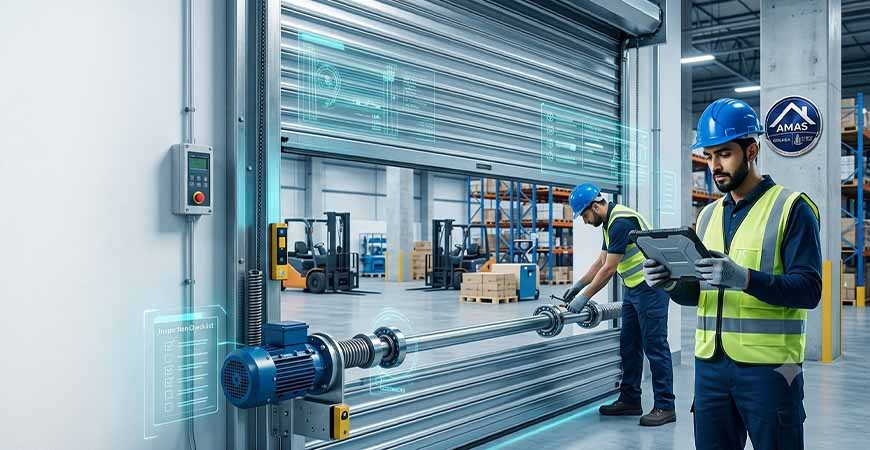
The Ultimate Guide to Rolling Shutter Door Maintenance
The Ultimate Guide to Rolling Shutter Door Maintenance: Maximizing Safety, Security, and Operational Performance
Introduction
Every day, thousands of industrial facilities, commercial buildings, shopping malls, logistics centers, warehouses, hospitals, hotels, and residential developments depend on rolling shutter doors to protect valuable assets while ensuring smooth daily operations. Although these doors are often overlooked until a problem occurs, they represent one of the most critical mechanical systems in any facility.
A rolling shutter door does much more than simply open and close. It secures buildings against unauthorized access, protects employees and equipment, contributes to fire compartmentation, supports operational efficiency, and helps maintain compliance with safety regulations. Whether manually operated or fully automated, every shutter door is subjected to continuous mechanical stress, environmental exposure, vibration, dust, and daily wear.
Without a structured Rolling Shutter Door Maintenance program, even the highest-quality shutter system can gradually develop hidden defects. Minor issues such as insufficient lubrication, loose fasteners, worn bearings, or slight motor misalignment can quickly escalate into costly failures, unexpected downtime, safety hazards, or complete operational shutdowns.
Preventive maintenance is therefore not simply a repair strategy it is a proactive investment in reliability, safety, and long-term asset performance. Routine inspections allow maintenance professionals to identify developing faults before they affect production schedules or compromise building security.
This comprehensive guide explores every aspect of professional rolling shutter maintenance, from understanding how shutter systems operate to implementing preventive maintenance schedules, diagnosing common failures, maintaining fire-rated shutters, inspecting automation systems, and selecting qualified maintenance specialists.
Whether you are a facility manager, maintenance engineer, warehouse operator, property owner, or operations director, this guide provides practical knowledge that helps maximize equipment lifespan, reduce operating costs, improve workplace safety, and maintain uninterrupted business operations.
What Is a Rolling Shutter Door?
A Rolling Shutter Door is a vertically operating door system consisting of interlocking steel or aluminum slats that roll around a barrel or shaft positioned above the opening. Unlike hinged or sectional doors, rolling shutters occupy minimal ceiling space and are particularly suitable for locations where overhead clearance is limited.
Modern rolling shutter doors are engineered for high-frequency operation and can be designed for manual, chain-operated, spring-assisted, or fully automated use. Depending on the application, they may incorporate advanced safety devices, motorized controls, remote operation, emergency override systems, and smart building integration.
Professional shutter systems are commonly designed to withstand:
- High operating cycles
- Heavy wind loads
- Continuous industrial usage
- Fire protection requirements
- Forced-entry resistance
- Harsh environmental conditions
- Corrosion in coastal environments
Because these systems combine mechanical, structural, and electrical components, they require specialized maintenance procedures to ensure safe and reliable performance throughout their service life.
Types of Rolling Shutter Doors
Selecting the appropriate rolling shutter depends on operational requirements, environmental conditions, security needs, and regulatory compliance. Each type is engineered for specific applications and maintenance considerations.
Industrial Rolling Shutters
Industrial rolling shutters are designed for heavy-duty environments where reliability and durability are essential. They are commonly installed in:
- Manufacturing plants
- Distribution centers
- Warehouses
- Logistics facilities
- Loading docks
- Industrial workshops
These shutters are built using reinforced steel slats, heavy-duty shafts, industrial-grade bearings, and powerful motors capable of handling frequent operating cycles.
Routine maintenance focuses on structural integrity, motor performance, spring tension, shaft alignment, and guide rail condition to ensure uninterrupted industrial operations.
Commercial Rolling Shutters
Commercial rolling shutters prioritize security while maintaining an attractive appearance suitable for customer-facing environments.
Typical installations include:
- Shopping malls
- Retail stores
- Banks
- Hotels
- Restaurants
- Office buildings
- Parking facilities
Many commercial shutters feature powder-coated finishes, perforated slats, transparent polycarbonate panels, or architectural designs that complement building aesthetics while providing reliable security.
Maintenance programs emphasize smooth operation, appearance, corrosion prevention, and automation reliability.
Automatic Rolling Shutter Doors
Automatic rolling shutter doors utilize electric motors and intelligent control systems to provide efficient, hands-free operation.
Automation components typically include:
- Electric drive motors
- Gear reduction systems
- Control panels
- Limit switches
- Safety sensors
- Remote controls
- Key switches
- Emergency manual override
- Smart access systems
Because these doors integrate both mechanical and electrical systems, preventive maintenance must include motor diagnostics, electrical testing, sensor calibration, and software verification where applicable.
Fire-Rated Rolling Shutters
Fire-rated rolling shutters are specialized life-safety systems designed to contain fire and smoke by automatically closing when activated by a fire alarm or heat detection system.
These shutters are commonly installed in:
- Hospitals
- Airports
- Shopping malls
- Commercial complexes
- Industrial plants
- Warehouses
- Hotels
- High-rise buildings
Unlike standard shutters, fire-rated systems require regular functional testing to ensure they deploy correctly during emergencies. Maintenance must comply with applicable fire safety regulations and manufacturer recommendations.
Insulated Rolling Shutters
Insulated shutters incorporate thermal insulation within the slats to improve energy efficiency and reduce heat transfer. They are particularly beneficial for:
- Cold storage facilities
- Food processing plants
- Pharmaceutical warehouses
- Temperature-controlled logistics centers
Preventive maintenance helps preserve insulation performance while ensuring smooth mechanical operation.
High-Speed Rolling Doors
High-speed doors are engineered for environments requiring rapid opening and closing cycles, such as:
- Clean rooms
- Distribution hubs
- Manufacturing facilities
- Logistics centers
Because these systems may operate hundreds of times each day, maintenance intervals are generally shorter than those for conventional rolling shutters.
How Rolling Shutter Doors Work
Although rolling shutter doors may appear mechanically simple, they rely on the coordinated operation of multiple precision-engineered components. Understanding how these elements interact helps maintenance personnel identify developing issues before they become major failures.
The operating cycle begins when the user activates the door using a push button, remote transmitter, access control device, or building automation system. This signal is transmitted to the control panel, which processes the command and energizes the drive motor.
The motor transfers rotational force through a gearbox to the central shaft, around which the shutter curtain is wound. As the shaft rotates, the interconnected slats move vertically within guide rails installed on either side of the opening.
Several components work together throughout this movement:
- The shaft supports the curtain and distributes mechanical loads.
- Bearings minimize friction and ensure smooth rotation.
- Guide rails maintain proper alignment.
- Springs or counterbalance mechanisms reduce the load placed on the motor.
- Limit switches stop the door precisely at the fully open and fully closed positions.
- Safety sensors detect obstacles and prevent unsafe operation.
- Emergency override systems allow manual operation during power failures.
Modern automatic shutters may also integrate with:
- Building Management Systems (BMS)
- Fire alarm systems
- Access control platforms
- Smart monitoring software
- Remote diagnostic tools
Because each component depends on the others, failure in one area can affect the performance of the entire system. For example, a worn bearing can increase shaft resistance, forcing the motor to work harder and accelerating wear on the gearbox and electrical components. This is why comprehensive inspections are essential.
Applications of Rolling Shutter Doors Across Different Industries
Rolling shutter doors are among the most versatile access systems used in modern buildings. Their ability to provide security, operational efficiency, environmental protection, and controlled access makes them an essential component across numerous industries. However, each industry places unique demands on shutter systems, requiring tailored maintenance strategies to ensure reliable long-term performance.
Manufacturing Facilities
Manufacturing plants rely heavily on industrial rolling shutter doors to separate production zones, secure machinery, regulate access, and protect valuable inventory. In these environments, doors may operate dozens or even hundreds of times per day.
Exposure to dust, metal particles, vibration, oils, chemicals, and continuous mechanical cycling accelerates component wear. Preventive maintenance is therefore essential to maintain smooth operation, minimize production interruptions, and prevent costly equipment failures.
Routine inspections in manufacturing environments typically include:
- Motor performance evaluation
- Shaft alignment verification
- Bearing lubrication
- Guide rail cleaning
- Curtain balance assessment
- Safety device testing
Warehouses and Distribution Centers
Modern warehouses depend on rolling shutter doors to facilitate the continuous movement of goods while protecting inventory from theft and environmental conditions.
Warehouse shutter doors often operate under demanding conditions, including:
- High-frequency opening and closing
- Forklift traffic
- Loading dock impacts
- Dust accumulation
- Weather exposure
Preventive maintenance helps reduce downtime during peak logistics operations while extending equipment lifespan.
Regular servicing ensures:
- Faster loading operations
- Reduced operational delays
- Lower repair costs
- Enhanced workplace safety
- Improved energy efficiency
Logistics and Transportation Hubs
Distribution centers and logistics facilities operate around the clock. Rolling shutter doors installed at loading bays must perform consistently despite continuous vehicle movements and changing environmental conditions.
Maintenance programs for logistics facilities typically emphasize:
- High-cycle motor inspection
- Emergency opening systems
- Sensor calibration
- Impact damage assessment
- Structural alignment checks
Even minor operational delays at loading bays can affect delivery schedules throughout the supply chain.
Shopping Malls and Retail Centers
Commercial rolling shutters provide both security and aesthetic value for retail businesses.
Retail facilities require shutters that:
- Operate quietly
- Open quickly
- Maintain attractive finishes
- Provide reliable security after business hours
Routine servicing minimizes operational disruptions while preserving customer experience.
Maintenance activities often include:
- Surface cleaning
- Corrosion prevention
- Motor adjustment
- Automation testing
- Cosmetic inspections
- Lock mechanism servicing
Hospitals and Healthcare Facilities
Healthcare environments demand exceptionally reliable access systems.
Rolling shutters may protect:
- Pharmacy storage
- Medical equipment rooms
- Emergency supply areas
- Waste handling zones
- Restricted laboratories
Maintenance in healthcare facilities focuses on:
- Quiet operation
- Emergency functionality
- Fire safety integration
- Hygiene compliance
- Reliable automation
Unexpected door failures can directly affect emergency response times.
Hotels and Hospitality Facilities
Hotels use rolling shutter doors for:
- Service entrances
- Parking facilities
- Loading areas
- Storage rooms
- Kitchen delivery zones
Preventive maintenance ensures minimal noise, dependable operation, and uninterrupted guest services.
Airports
Airport facilities require highly dependable industrial door systems capable of supporting demanding operational schedules.
Applications include:
- Cargo terminals
- Aircraft maintenance hangars
- Baggage handling facilities
- Equipment storage
- Service access points
Maintenance programs emphasize strict safety compliance, redundancy, and rapid fault diagnosis.
Residential Communities
Automatic rolling shutters are increasingly used within residential developments for:
- Underground parking
- Villa garages
- Community access points
- Utility rooms
Regular maintenance improves homeowner safety while extending equipment lifespan.
Why Rolling Shutter Door Maintenance Is Essential
Many facility owners mistakenly assume that rolling shutter doors require attention only after a breakdown occurs. In reality, reactive maintenance is significantly more expensive than planned preventive maintenance.
Every operating cycle generates small amounts of wear across multiple components. Although this wear is initially invisible, it gradually accumulates until performance deteriorates.
A structured maintenance program addresses these issues before they become operational failures.
Protecting Occupant Safety
Safety is the primary reason for routine maintenance.
A malfunctioning shutter door can create serious hazards, including:
- Falling curtain assemblies
- Crushing injuries
- Entrapment risks
- Electrical faults
- Fire safety failures
- Emergency exit obstruction
Professional inspections identify these risks before accidents occur.
Preventing Unexpected Downtime
Industrial operations rely on continuous workflow.
A single failed loading bay door can disrupt:
- Production schedules
- Goods receiving
- Product dispatch
- Forklift operations
- Vehicle movements
Preventive maintenance significantly reduces unplanned downtime.
Reducing Operating Costs
Small repairs are considerably less expensive than replacing major components.
For example:
Replacing a worn bearing during routine maintenance may require only a short service visit. Ignoring the problem can eventually damage:
- Shaft assemblies
- Motors
- Gearboxes
- Guide rails
- Control systems
The resulting repair costs may be several times higher.
Extending Equipment Lifespan
Properly maintained rolling shutters commonly remain in service for 20 years or more.
Routine servicing slows component deterioration by ensuring:
- Proper lubrication
- Correct alignment
- Balanced operation
- Reduced mechanical stress
- Early fault correction
Improving Security
A poorly maintained shutter may fail to close completely or lock securely.
Routine inspections verify:
- Lock operation
- Curtain alignment
- Guide rail integrity
- Bottom seal condition
- Structural stability
These checks help maintain building security.
Supporting Regulatory Compliance
Many commercial and industrial facilities must comply with:
- Occupational safety regulations
- Fire protection standards
- Insurance requirements
- Manufacturer recommendations
Documented maintenance records demonstrate responsible asset management and may support insurance claims.
Benefits of Preventive Maintenance
Preventive maintenance involves scheduled inspections and servicing performed before failures occur.
Rather than reacting to breakdowns, maintenance professionals monitor equipment condition and correct developing issues early.
Increased Reliability
Well-maintained doors operate consistently under demanding conditions.
Reliable equipment improves:
- Employee productivity
- Logistics efficiency
- Customer service
- Operational continuity
Lower Total Cost of Ownership
Preventive maintenance reduces:
- Emergency callouts
- Major component replacements
- Production losses
- Overtime labor
- Equipment downtime
Over the lifespan of a shutter system, planned maintenance typically delivers significant cost savings.
Improved Energy Efficiency
Poor alignment, damaged seals, or excessive friction increase motor workload.
Maintenance helps maintain efficient operation through:
- Lubrication
- Alignment correction
- Seal replacement
- Motor adjustment
Lower mechanical resistance translates into reduced energy consumption.
Enhanced Workplace Safety
Routine inspections verify that all safety devices function correctly.
These include:
- Photoelectric sensors
- Safety edges
- Emergency stop systems
- Manual override mechanisms
- Limit switches
Testing these components helps prevent accidents.
Better Asset Planning
Maintenance reports provide valuable information regarding equipment condition.
Facility managers can use inspection data to:
- Plan capital expenditures
- Schedule future upgrades
- Budget replacement parts
- Predict equipment lifespan
This proactive approach improves long-term facility management.
Improved Business Continuity
Unexpected shutter failures often occur at the worst possible time during peak production, busy retail hours, or critical logistics operations.
Preventive maintenance minimizes these risks by ensuring equipment remains ready for daily operation.
Enhanced Customer Confidence
For commercial properties, well-maintained entrances reflect professionalism and reliability.
Customers are more likely to trust businesses that demonstrate attention to safety, cleanliness, and operational excellence.
Environmental Sustainability
Extending the lifespan of existing equipment reduces material waste and the environmental impact associated with manufacturing and transporting replacement components.
Preventive maintenance also supports sustainability goals by improving energy efficiency and reducing unnecessary resource consumption.
The Financial Impact of Deferred Maintenance
Organizations sometimes postpone maintenance to reduce short-term expenses. While this may appear economical, deferred maintenance often leads to significantly higher long-term costs.
Consider a warehouse where a slightly noisy bearing is ignored. Over several months, increased friction places additional strain on the shaft and drive motor. Eventually, the motor overheats, the gearbox suffers premature wear, and the shutter becomes inoperable.
Instead of replacing a relatively inexpensive bearing during a scheduled visit, the facility now faces:
- Emergency repair charges
- Replacement of multiple major components
- Delivery delays
- Temporary security vulnerabilities
- Production downtime
- Potential overtime costs
This scenario illustrates why preventive maintenance should be viewed as an investment rather than an expense.
Common Rolling Shutter Door Problems
Even the highest-quality rolling shutter doors are subject to wear over time. Continuous operation, environmental exposure, inadequate servicing, accidental impacts, and aging components all contribute to mechanical and electrical deterioration. Understanding the most common failures enables facility managers and maintenance teams to address issues before they escalate into costly breakdowns.
1. Shutter Door Jamming
A shutter that sticks, hesitates, or becomes completely jammed is one of the most frequent service calls.
Common Causes
- Dirty or obstructed guide rails
- Misaligned curtain slats
- Damaged bottom bar
- Bent guide channels
- Foreign objects lodged in the tracks
- Worn bearings
- Shaft misalignment
Ignoring a jammed shutter can overload the drive motor, damage the gearbox, and deform the curtain assembly.
Professional technicians first identify the root cause before attempting to force the door open, as forcing operation can significantly increase repair costs.
2. Excessive Operating Noise
A properly maintained rolling shutter should operate smoothly with relatively low noise levels.
Grinding, squealing, rattling, or banging sounds typically indicate developing mechanical problems.
Common sources include:
- Dry bearings
- Loose fasteners
- Worn guide rails
- Insufficient lubrication
- Motor vibration
- Loose chain assemblies
- Damaged curtain slats
Noise is often one of the earliest warning signs that maintenance is overdue.
3. Slow Opening and Closing
Gradually slowing operation often indicates increasing mechanical resistance.
Possible causes include:
- Aging motor
- Low motor voltage
- Gearbox wear
- Shaft friction
- Spring imbalance
- Bearing deterioration
- Dirt accumulation
A professional inspection measures operating speed while evaluating electrical current draw and mechanical resistance.
4. Motor Failure
The electric motor is the heart of an automatic rolling shutter system.
Motor failures may result from:
- Overheating
- Moisture intrusion
- Excessive operating cycles
- Electrical overload
- Insulation breakdown
- Worn brake assemblies
- Poor preventive maintenance
Most motor failures develop gradually rather than occurring suddenly.
5. Spring Fatigue
Counterbalance springs support much of the curtain's weight.
As springs age, they gradually lose their designed tension.
Symptoms include:
- Heavy door operation
- Motor overload
- Uneven movement
- Difficulty opening manually
- Increased vibration
Springs should never be adjusted by untrained personnel due to the significant stored mechanical energy.
6. Damaged Curtain Slats
Individual slats may become damaged because of:
- Forklift collisions
- Vehicle impacts
- Corrosion
- Wind loads
- Attempted forced entry
- Metal fatigue
Minor damage can often be repaired, while severe deformation may require sectional replacement.
7. Electrical Control Failures
Modern shutters depend on sophisticated electrical systems.
Potential faults include:
- Burned relays
- Damaged contactors
- Loose wiring
- Failed transformers
- Faulty limit switches
- Circuit board failures
Electrical diagnostics should always be performed using appropriate testing equipment.
8. Sensor Malfunctions
Safety sensors prevent injury by detecting people, vehicles, or obstacles.
Sensor problems commonly result from:
- Dirt accumulation
- Misalignment
- Cable damage
- Moisture
- Electrical interference
Routine testing ensures these critical safety devices remain fully operational.
9. Corrosion
Facilities located near coastal environments face accelerated corrosion due to salt-laden air.
Affected components include:
- Shafts
- Bearings
- Fasteners
- Guide rails
- Curtain slats
- Mounting brackets
Protective coatings and scheduled inspections significantly reduce corrosion-related failures.
10. Gearbox Wear
The gearbox transfers motor torque to the shaft.
Over time, gear teeth may wear because of:
- Poor lubrication
- Overloading
- Misalignment
- Aging components
Early diagnosis prevents complete gearbox failure.
Warning Signs Your Shutter Requires Immediate Maintenance
Rolling shutter systems rarely fail without warning. Most breakdowns are preceded by subtle changes in performance that become more noticeable over time.
Recognizing these warning signs allows maintenance teams to intervene before safety or operational reliability is compromised.
Door Hesitates During Movement
A shutter that pauses or jerks during operation often indicates increasing friction, motor strain, or alignment issues.
Uneven Curtain Movement
If one side of the curtain moves faster than the other, technicians should immediately inspect:
- Shaft alignment
- Guide rails
- Spring balance
- Bearing condition
Uneven movement places excessive stress on the curtain and supporting components.
Visible Rust
Surface corrosion should never be ignored.
Rust can weaken structural components and accelerate deterioration of bearings, fasteners, and support brackets.
Oil Leaks
Oil leaking from the gearbox generally indicates:
- Worn seals
- Housing damage
- Internal wear
Operating with insufficient lubricant can destroy the gearbox.
Increased Vibration
Excessive vibration often results from:
- Loose mounting bolts
- Bent shafts
- Worn bearings
- Gearbox defects
- Motor imbalance
Ignoring vibration accelerates wear throughout the system.
Inconsistent Motor Sound
Changes in motor noise frequently precede electrical or mechanical failure.
Buzzing, humming, clicking, or grinding should always be investigated.
Failure to Fully Close
A shutter that stops before reaching the floor compromises both security and environmental protection.
Potential causes include:
- Faulty limit switches
- Obstructed guide rails
- Motor calibration issues
- Control panel faults
Frequent Circuit Breaker Trips
Repeated electrical trips indicate abnormal current draw.
Possible causes include:
- Motor overload
- Short circuits
- Damaged wiring
- Mechanical resistance
Electrical testing should be performed immediately.
Burnt Odor
A burning smell often indicates overheating electrical components.
Immediate shutdown and inspection are recommended to prevent further damage.
Increased Energy Consumption
A motor that works harder because of mechanical resistance consumes more electricity.
Unexpected increases in energy use may indicate hidden mechanical problems.
Step-by-Step Professional Inspection Process
Professional rolling shutter maintenance follows a structured inspection methodology rather than a simple visual examination.
Experienced technicians inspect every mechanical, electrical, and safety component systematically.
Step 1 — Review Maintenance History
Before beginning physical inspection, technicians review:
- Previous service reports
- Repair records
- Component replacement history
- Reported operational issues
- Manufacturer recommendations
Historical data often helps identify recurring faults.
Step 2 — Visual Inspection
The inspection begins with a thorough visual assessment.
Technicians examine:
- Curtain condition
- Guide rails
- Bottom bar
- Mounting brackets
- Fasteners
- Corrosion
- Structural damage
- Safety signage
Photographs are often taken for maintenance records.
Step 3 — Operational Test
The door is cycled several times.
Technicians observe:
- Opening speed
- Closing speed
- Noise levels
- Vibration
- Smoothness
- Motor response
- Limit switch accuracy
Abnormal behavior is documented for further investigation.
Step 4 — Mechanical Inspection
Each major mechanical component is inspected individually.
Areas include:
- Shaft
- Bearings
- Springs
- Curtain slats
- Guide rails
- Chains
- Gearbox
- Fasteners
Wear measurements may be recorded where necessary.
Step 5 — Electrical Inspection
Electrical testing includes:
- Motor current measurement
- Voltage verification
- Wiring inspection
- Earth continuity
- Insulation resistance
- Control panel diagnostics
Any signs of overheating are investigated immediately.
Step 6 — Safety System Testing
Critical safety devices are tested under controlled conditions.
This includes:
- Photoelectric sensors
- Safety edges
- Emergency stop buttons
- Manual override
- Fire alarm interface
- Auto-reverse functionality
Safety testing is documented as part of compliance records.
Step 7 — Lubrication
After inspection, technicians lubricate all approved moving components using manufacturer-recommended lubricants.
Over-lubrication is avoided because excessive grease attracts dirt and debris.
Step 8 — Final Performance Verification
The inspection concludes with multiple operational cycles to confirm:
- Smooth movement
- Correct motor operation
- Accurate stopping positions
- Reliable safety device performance
A detailed maintenance report is then prepared for the facility owner.
Mechanical Maintenance Procedures
Mechanical components experience the greatest physical stress during daily operation. Proper maintenance minimizes friction, reduces wear, and extends the service life of the entire shutter system.
Guide Rail Maintenance
Guide rails ensure accurate curtain movement.
Maintenance tasks include:
- Removing dirt and debris
- Checking vertical alignment
- Inspecting mounting bolts
- Verifying rail spacing
- Repairing damaged sections
Even slight guide rail distortion can increase friction significantly.
Curtain Inspection
Technicians inspect each slat for:
- Cracks
- Corrosion
- Impact damage
- Misalignment
- Loose connections
Damaged sections are repaired or replaced to maintain smooth operation.
Shaft Inspection
The shaft supports the full curtain weight.
Inspection includes:
- Straightness verification
- Surface wear assessment
- Corrosion inspection
- Mounting security
- Rotational smoothness
Bent shafts should be replaced rather than repaired.
Bearing Maintenance
Bearings reduce rotational friction.
Maintenance involves:
- Cleaning
- Lubrication
- Noise evaluation
- Temperature checks
- Replacement when excessive wear is detected
Bearing replacement is considerably less expensive than repairing secondary damage caused by bearing failure.
Spring Inspection
Counterbalance springs are checked for:
- Fatigue
- Corrosion
- Cracks
- Proper tension
- Secure mounting
Spring adjustments should always follow manufacturer specifications.
Fastener Tightening
Vibration gradually loosens bolts and mounting hardware.
Technicians verify torque settings on:
- Motor mounts
- Bearing supports
- Guide rails
- Brackets
- Control panels
- Shaft assemblies
Proper fastening maintains structural stability and reduces vibration.
Corrosion Protection
Protective coatings are inspected regularly, particularly in coastal or high-humidity environments.
Where necessary, technicians remove corrosion, apply protective treatments, and replace severely deteriorated components to preserve structural integrity.
Electrical and Motor Inspection
Modern automatic rolling shutter doors rely on electrical and electronic systems that work seamlessly with mechanical components. While mechanical wear is often visible, electrical faults can remain hidden until they cause sudden operational failures. For this reason, comprehensive electrical inspections are a vital part of every professional Rolling Shutter Door Maintenance program.
An experienced technician evaluates not only whether the motor is functioning, but also how efficiently it performs under normal operating conditions. Even small electrical abnormalities—such as voltage fluctuations, increased current draw, or inconsistent motor response—can indicate developing problems that should be corrected before they lead to costly downtime.
Motor Performance Assessment
The drive motor converts electrical energy into the mechanical force required to lift and lower the shutter curtain. During inspection, technicians verify that the motor operates smoothly throughout the complete opening and closing cycle.
Key inspection points include:
- Smooth start-up and stopping
- Stable operating speed
- Excessive vibration
- Unusual operating noise
- Signs of overheating
- Brake performance
- Gear reduction efficiency
- Motor mounting security
Using diagnostic instruments, technicians compare the motor's electrical current with the manufacturer's specifications. Higher-than-normal current often indicates increased mechanical resistance caused by worn bearings, guide rail friction, or spring imbalance.
Temperature Monitoring
Motors naturally generate heat during operation, but excessive temperatures may indicate:
- Continuous overloading
- Poor ventilation
- Bearing friction
- Internal winding deterioration
- Electrical imbalance
Infrared thermal cameras are frequently used to identify abnormal heat patterns without dismantling equipment. Early detection of overheating helps prevent insulation failure and extends motor life.
Electrical Wiring Inspection
Every electrical connection is examined carefully for signs of deterioration.
Technicians inspect:
- Cable insulation
- Junction boxes
- Terminal connections
- Flexible conduits
- Cable glands
- Moisture ingress
- Loose wiring
- Heat discoloration
Even minor wiring defects can create intermittent faults that become increasingly difficult to diagnose if left unattended.
Insulation Resistance Testing
Electric motors gradually lose insulation quality due to age, moisture, vibration, and thermal stress.
Insulation resistance testing helps determine whether the motor windings remain in good condition. Low insulation values may indicate:
- Moisture contamination
- Aging insulation
- Internal winding damage
- Electrical leakage
Corrective action at this stage often prevents complete motor failure.
Limit Switch Calibration
Limit switches determine where the shutter stops during opening and closing.
Improper calibration may result in:
- Over-travel
- Incomplete closing
- Curtain impact damage
- Motor overloading
- Premature component wear
Technicians verify accurate stopping positions and adjust the switches when necessary.
Emergency Manual Override
Power failures can occur without warning. Every automatic shutter should therefore include a manual override mechanism that allows safe operation during electrical outages.
During maintenance, technicians confirm that:
- The override mechanism engages correctly.
- Manual operation is smooth.
- Emergency instructions remain visible.
- No excessive resistance is present.
This inspection is particularly important for facilities where emergency access is critical.
Control Panel and Automation System Testing
The control panel acts as the central command system of an automatic rolling shutter. It coordinates communication between motors, sensors, safety devices, remote controls, and building management systems.
A malfunctioning control panel can prevent an otherwise healthy shutter from operating correctly.
Visual Examination
Inspection begins with a careful visual assessment.
Technicians check for:
- Dust accumulation
- Water ingress
- Loose components
- Burn marks
- Corroded terminals
- Damaged relays
- Overheated circuit boards
Clean control panels improve reliability and simplify future servicing.
Functional Testing
Each operating function is tested individually.
These include:
- Open command
- Close command
- Stop command
- Emergency stop
- Automatic closing
- Manual override
- Remote activation
- Key switch operation
Any delay or inconsistency is investigated further.
Relay and Contactor Inspection
Relays and contactors repeatedly switch electrical loads during normal operation.
Over time, electrical contacts may become:
- Pitted
- Burned
- Carbonized
- Loose
Defective contactors increase electrical resistance and reduce overall system reliability.
Remote Control Verification
Remote transmitters and wireless control devices are tested to ensure:
- Reliable communication
- Appropriate operating range
- Secure signal reception
- Battery condition
- Proper programming
Where access control systems are integrated, technicians also verify communication with readers, keypads, or smart access platforms.
Building Management System Integration
Many commercial and industrial facilities connect rolling shutters to a Building Management System (BMS).
Integration testing confirms correct interaction with:
- Security systems
- Access control
- Fire alarm systems
- Emergency shutdown procedures
- Energy management platforms
Reliable communication between systems is essential for coordinated emergency response.
Lubrication Best Practices
Lubrication is one of the simplest yet most effective preventive maintenance tasks. Proper lubrication minimizes friction, reduces wear, lowers operating temperatures, and extends the lifespan of moving components.
However, more lubricant does not necessarily mean better performance. Over-lubrication can attract dust, trap debris, and create abrasive deposits that accelerate wear.
Selecting the Correct Lubricant
Lubricants should always match the manufacturer's recommendations.
Selection depends on factors such as:
- Operating temperature
- Environmental conditions
- Component material
- Operating frequency
- Humidity
- Dust exposure
Using an incorrect lubricant may damage seals or fail to provide adequate protection.
Components Requiring Lubrication
Routine lubrication commonly includes:
- Bearings
- Roller assemblies
- Chains
- Pivot points
- Hinges
- Drive mechanisms
- Gear assemblies (where applicable)
Guide rails are generally kept clean rather than heavily lubricated, as excessive grease may collect contaminants and interfere with smooth curtain movement.
Lubrication Frequency
Lubrication intervals vary according to operating conditions.
Examples include:
| Operating Environment | Recommended Inspection Interval |
|---|---|
| Standard commercial facilities | Every 6 months |
| Warehouses | Every 3–6 months |
| Manufacturing plants | Every 3 months |
| High-cycle logistics centers | Monthly inspections |
| Coastal environments | More frequent due to corrosion exposure |
Technicians adjust maintenance schedules based on actual operating cycles rather than calendar dates alone.
Cleaning Before Lubrication
Professional lubrication always begins with cleaning.
Old grease, dust, and debris are removed before applying fresh lubricant.
This prevents contaminants from becoming abrasive and damaging moving surfaces.
Spring, Shaft, Bearing, and Guide Rail Inspection
These components form the structural and mechanical foundation of every rolling shutter system. Because they carry significant mechanical loads, regular inspection is essential for safe operation.
Spring Assessment
Counterbalance springs reduce the force required to move the shutter curtain.
Technicians inspect for:
- Surface corrosion
- Fatigue
- Cracking
- Uniform tension
- Proper anchoring
- Signs of overstretching
Springs showing advanced fatigue should be replaced proactively rather than waiting for failure.
Shaft Alignment
The shaft supports the curtain and transmits torque from the drive motor.
Inspection includes:
- Straightness
- Rotational balance
- Surface wear
- Corrosion
- Secure mounting
- Bearing fit
A misaligned shaft can increase stress on the motor, gearbox, and curtain assembly.
Bearing Evaluation
Bearings operate continuously whenever the shutter moves.
Professional evaluation includes:
- Rotation smoothness
- Noise monitoring
- Temperature assessment
- Lubrication condition
- Axial movement
- Radial play
Early bearing replacement is one of the most cost-effective preventive maintenance actions.
Guide Rail Inspection
Guide rails maintain curtain alignment throughout every operating cycle.
Technicians inspect:
- Straightness
- Mounting stability
- Wear patterns
- Fastener security
- Internal cleanliness
- Corrosion
- Impact damage
Even slight guide rail deformation can increase friction and accelerate curtain wear.
Safety Sensor Testing
Safety devices are designed to protect people, vehicles, and equipment from injury or damage. Their reliability is critical, particularly in facilities with frequent traffic or automated operations.
Photoelectric Sensors
Photoelectric sensors detect obstacles by transmitting an infrared beam across the door opening.
During testing, technicians verify:
- Accurate alignment
- Lens cleanliness
- Response time
- Correct wiring
- Reliable interruption detection
Any delay or failure requires immediate correction.
Safety Edge Testing
Many automatic shutters incorporate pressure-sensitive safety edges along the bottom bar.
These devices should immediately stop and reverse the door if they contact an obstruction.
Routine testing confirms:
- Proper activation
- Consistent response
- Secure mounting
- Cable integrity
Auto-Reverse Function
When an obstacle is detected, the shutter should automatically reverse direction to prevent injury or equipment damage.
Technicians simulate controlled obstruction scenarios to confirm that the auto-reverse system responds correctly.
Emergency Stop Devices
Emergency stop buttons must remain easily accessible and function instantly.
Inspection includes:
- Operational testing
- Visibility
- Label condition
- Mechanical integrity
- Electrical continuity
Fire Alarm Interface
For fire-rated rolling shutters, technicians verify communication between the door controller and the building's fire alarm system.
Tests confirm that the shutter:
- Receives the fire alarm signal
- Closes automatically
- Completes its travel without obstruction
- Resets correctly after testing
Reliable operation during an emergency is essential for occupant safety and regulatory compliance.
Engineering Best Practice
A professional maintenance visit should never conclude without a complete operational test after all adjustments, repairs, and inspections have been completed. Final verification confirms that the shutter operates smoothly, all safety devices function correctly, and no new issues have been introduced during servicing. Comprehensive documentation of inspection results, corrective actions, and future recommendations provides facility managers with a valuable maintenance history that supports long-term asset management and compliance.
Fire-Rated Rolling Shutter Maintenance
Fire-rated rolling shutters are not simply security doors they are engineered life-safety systems designed to compartmentalize fire, limit the spread of smoke, and provide valuable time for occupants to evacuate and emergency responders to intervene. Because they perform a critical role during emergencies, their maintenance requirements are significantly more stringent than those of standard rolling shutters.
Unlike conventional shutters that primarily protect property, fire-rated shutters must function flawlessly under extreme conditions. A door that fails to deploy during a fire can compromise an entire building's fire protection strategy.
Why Fire-Rated Shutters Require Specialized Maintenance
These systems are integrated with life safety infrastructure, including:
- Fire alarm systems
- Smoke detection systems
- Emergency power supplies
- Automatic release mechanisms
- Fusible links (where applicable)
- Gravity descent systems
- Electromagnetic hold-open devices
Each component must operate exactly as designed to ensure the shutter closes safely when activated.
Routine Inspection Checklist
Professional inspections should include:
- Verification of curtain integrity
- Guide rail alignment
- Bottom bar condition
- Shaft and barrel inspection
- Spring balance assessment
- Release mechanism testing
- Fire alarm interface verification
- Emergency reset procedure
- Battery backup inspection (where installed)
- Automatic closing speed measurement
Technicians should also inspect for corrosion, physical damage, or unauthorized modifications that could affect fire performance.
Functional Drop Testing
One of the most important maintenance procedures is controlled drop testing.
During this process, technicians confirm that:
- The shutter receives the alarm signal.
- The release mechanism activates correctly.
- The curtain descends smoothly.
- The descent speed remains within manufacturer specifications.
- The door fully closes without obstruction.
- Reset procedures function correctly.
Testing should always follow approved safety procedures to avoid damage or injury.
Importance of Documentation
Fire-rated shutter maintenance should be documented thoroughly.
Inspection reports typically include:
- Inspection date
- Technician details
- Test results
- Deficiencies identified
- Corrective actions
- Replacement parts installed
- Recommended follow-up work
Accurate documentation supports regulatory compliance, insurance requirements, and long-term asset management.
Emergency Repair Services
Despite well-planned preventive maintenance, unexpected failures can still occur due to accidental impacts, electrical faults, severe weather, or component fatigue. In such situations, rapid emergency response is essential to restore security and minimize operational disruption.
Common Emergency Situations
Emergency service requests often involve:
- Shutters stuck in the open position
- Doors refusing to open
- Motor burnout
- Broken springs
- Vehicle impact damage
- Curtain derailment
- Electrical failures
- Fire alarm activation faults
- Control panel malfunction
- Guide rail collapse
Each scenario requires a systematic diagnostic approach rather than temporary fixes.
Emergency Response Priorities
Professional emergency repair teams generally follow a structured process:
- Secure the area to eliminate immediate safety risks.
- Assess structural stability.
- Diagnose the root cause of the failure.
- Restore safe operation where possible.
- Recommend permanent repairs or component replacement if required.
Safety should always take precedence over restoring operation.
Benefits of Rapid Emergency Support
Prompt intervention helps organizations:
- Protect assets from unauthorized access
- Resume production quickly
- Minimize downtime
- Reduce business interruption
- Prevent secondary damage
- Maintain employee safety
Facilities operating around the clock often rely on 24/7 emergency maintenance contracts to ensure immediate technical assistance.
Preventive Maintenance Schedule
There is no universal maintenance schedule suitable for every rolling shutter. Inspection frequency depends on operating cycles, environmental conditions, and the critical nature of the installation.
The following schedule provides a practical framework that can be adjusted based on manufacturer recommendations and actual site conditions.
| Maintenance Activity | Recommended Frequency |
|---|---|
| Visual inspection | Monthly |
| Operational testing | Monthly |
| Guide rail cleaning | Monthly |
| Safety sensor testing | Monthly |
| Lubrication of approved components | Every 3–6 months |
| Motor inspection | Every 6 months |
| Electrical testing | Every 6 months |
| Bearing inspection | Every 6 months |
| Spring inspection | Every 6 months |
| Control panel inspection | Every 6 months |
| Full preventive maintenance service | Annually |
| Fire-rated shutter testing | As required by local regulations and manufacturer guidance |
High-cycle industrial environments may require significantly shorter maintenance intervals.
Maintenance Frequency by Industry
Manufacturing Plants
Recommended service interval:
Every 3 months due to continuous operation and exposure to dust, vibration, and heavy mechanical loads.
Warehouses
Quarterly preventive maintenance is generally appropriate, although high-volume logistics centers may require monthly inspections.
Shopping Malls
Biannual servicing is usually sufficient for retail applications unless operating frequency is unusually high.
Hospitals
Healthcare facilities should maintain frequent inspections to ensure uninterrupted access and life safety compliance.
Coastal Facilities
Salt exposure accelerates corrosion.
Additional inspections should focus on:
- Protective coatings
- Fasteners
- Bearings
- Guide rails
- Electrical enclosures
Spare Parts That Commonly Require Replacement
Every rolling shutter contains components classified as normal wear items. Replacing these parts before failure significantly improves system reliability.
Bearings
Bearings gradually wear due to continuous rotation.
Replacement indicators include:
- Noise
- Heat
- Excessive play
- Rough rotation
Springs
Counterbalance springs have finite service lives measured by operating cycles.
Replacement becomes necessary when:
- Tension decreases
- Corrosion develops
- Fatigue cracks appear
- Balance deteriorates
Limit Switches
Limit switches experience repeated mechanical operation.
Faulty switches may cause:
- Incomplete closing
- Over-travel
- Motor overloading
- Curtain impact
Motors
Although industrial motors are highly reliable, eventual replacement may be required because of:
- Insulation aging
- Bearing wear
- Brake failure
- Excessive operating hours
Gearboxes
Gearboxes are generally long-lasting when properly lubricated.
Replacement becomes necessary if inspections reveal:
- Internal wear
- Oil leakage
- Excessive backlash
- Gear tooth damage
Photoelectric Sensors
Environmental exposure may affect sensor reliability over time.
Replacement may be required because of:
- Physical damage
- Water ingress
- Lens deterioration
- Electronic failure
Curtain Slats
Individual slats can often be replaced without removing the complete curtain.
Replacement is recommended when damage affects:
- Structural integrity
- Alignment
- Security performance
- Weather resistance
Bottom Seals
Bottom weather seals deteriorate naturally through friction and environmental exposure.
Replacing worn seals improves:
- Dust control
- Water resistance
- Energy efficiency
- Noise reduction
How to Extend the Lifespan of a Rolling Shutter Door
A high-quality rolling shutter is a long-term investment. With proper maintenance, many systems remain in reliable service for two decades or longer.
The following best practices significantly increase equipment longevity.
Perform Regular Inspections
Small defects identified early are easier and less expensive to correct than major failures.
Routine inspections help detect:
- Loose fasteners
- Corrosion
- Misalignment
- Bearing wear
- Motor issues
Keep Guide Rails Clean
Accumulated debris increases friction and accelerates wear.
Guide rails should be cleaned regularly using appropriate non-abrasive methods.
Avoid Impact Damage
Forklift collisions remain one of the leading causes of industrial shutter repairs.
Protective barriers, driver awareness training, and clearly marked traffic routes help reduce accidental impacts.
Do Not Ignore Unusual Noises
Grinding, squealing, or vibration usually indicate developing problems.
Prompt inspection prevents further damage.
Replace Worn Components Proactively
Waiting for complete component failure often results in additional damage.
Planned replacement of aging bearings, springs, or sensors is generally more economical than emergency repairs.
Maintain Accurate Service Records
Detailed maintenance records allow facility managers to:
- Track equipment condition
- Identify recurring issues
- Plan budgets
- Schedule future upgrades
- Demonstrate regulatory compliance
Train Facility Personnel
Operators should understand:
- Correct operating procedures
- Emergency shutdown methods
- Basic visual inspections
- Reporting procedures for unusual operation
Proper operator awareness significantly reduces avoidable damage.
Safety Standards and Compliance
Rolling shutter doors are subject to a range of safety requirements that vary according to jurisdiction, building type, and intended use. Compliance is not only a legal responsibility but also a key element of effective risk management.
A professionally maintained shutter system helps organizations meet the expectations of regulators, insurers, auditors, and building owners.
Key compliance considerations include:
- Routine documented inspections
- Functional testing of safety devices
- Fire-rated shutter performance verification
- Safe electrical installations
- Emergency override accessibility
- Proper maintenance records
- Manufacturer maintenance recommendations
- Risk assessment reviews
Organizations should ensure that maintenance activities are performed by qualified technicians using approved procedures and genuine replacement parts whenever possible.
Engineering Insight
The most successful maintenance strategies are proactive rather than reactive. Facilities that invest in scheduled inspections, data-driven maintenance planning, and operator awareness consistently experience lower lifecycle costs, fewer emergency repairs, improved safety performance, and longer equipment service life. Rolling shutter doors are not simply building accessories—they are critical operational assets that deserve the same level of attention as any other essential mechanical or electrical system.
Choosing the Right Rolling Shutter Maintenance Company
Selecting a qualified maintenance provider is one of the most important decisions a facility owner or manager can make. While many companies offer basic repair services, only experienced specialists have the technical expertise, diagnostic equipment, and preventive maintenance capabilities required to maximize the safety, reliability, and lifespan of industrial and commercial rolling shutter systems.
The right maintenance partner should focus on preventing failures not simply responding to them.
Evaluate Industry Experience
Rolling shutter systems vary significantly between industrial plants, logistics centers, shopping malls, hospitals, airports, and residential developments. A maintenance company with broad industry experience is better equipped to understand the operational demands of different environments and recommend tailored maintenance strategies.
Experienced technicians are more likely to identify developing faults before they become major failures, reducing downtime and avoiding unnecessary replacement costs.
Verify Technical Qualifications
Qualified maintenance teams should possess expertise in:
- Mechanical systems
- Electrical troubleshooting
- Motor diagnostics
- Automation systems
- Fire-rated shutter testing
- Safety inspections
- Preventive maintenance planning
A multidisciplinary approach ensures that both mechanical and electrical issues are addressed during every service visit.
Comprehensive Inspection Programs
A professional maintenance company should provide structured inspection programs rather than basic visual checks.
A complete maintenance visit should include:
- Mechanical inspection
- Electrical testing
- Motor performance evaluation
- Safety sensor testing
- Lubrication
- Operational testing
- Detailed reporting
- Maintenance recommendations
Comprehensive inspections improve long-term reliability and support regulatory compliance.
Emergency Response Capability
Unexpected failures can occur despite routine maintenance.
When evaluating a service provider, consider:
- Emergency response availability
- Average response times
- Spare parts inventory
- Mobile service capabilities
- Technical support availability
Rapid response minimizes operational disruption and restores security quickly.
Maintenance Documentation
Professional reporting provides valuable insight into equipment condition.
Maintenance reports should include:
- Inspection findings
- Components serviced
- Measurements recorded
- Deficiencies identified
- Corrective actions completed
- Recommended future work
- Photographic documentation where appropriate
Accurate records support asset management, budgeting, warranty requirements, and compliance audits.
Genuine Replacement Parts
Whenever replacement components are required, reputable providers should use high-quality parts that meet manufacturer specifications.
Using compatible, professionally sourced components helps ensure:
- Reliable operation
- Longer service life
- Better safety performance
- Reduced future maintenance costs
Future Trends in Smart Automatic Rolling Shutters
The next generation of rolling shutter technology is transforming maintenance from a reactive process into a predictive, data-driven discipline. Advances in automation, connectivity, and artificial intelligence are enabling facilities to monitor equipment performance continuously and address issues before failures occur.
Predictive Maintenance
Instead of relying solely on fixed service intervals, predictive maintenance uses real-time operating data to identify early signs of wear.
Smart systems can monitor:
- Motor current
- Operating cycles
- Opening speed
- Vibration levels
- Temperature
- Power consumption
- Fault history
By analyzing this information, maintenance teams can schedule interventions only when necessary, reducing unnecessary service visits while preventing unexpected failures.
Internet of Things (IoT) Integration
IoT-enabled rolling shutters communicate with centralized management platforms, allowing facility managers to oversee multiple sites from a single dashboard.
Benefits include:
- Remote status monitoring
- Instant fault notifications
- Performance analytics
- Energy usage tracking
- Maintenance scheduling
- Remote diagnostics
This level of visibility is particularly valuable for organizations managing large property portfolios.
Artificial Intelligence and Data Analytics
AI-powered software can analyze historical maintenance records alongside real-time operating data to predict component wear with increasing accuracy.
Potential applications include:
- Motor lifespan prediction
- Bearing failure forecasting
- Automated maintenance recommendations
- Energy optimization
- Performance benchmarking
These technologies support more efficient maintenance planning and improved asset utilization.
Enhanced Safety Features
Modern automatic shutters increasingly incorporate advanced safety technologies, including:
- Intelligent obstacle detection
- Adaptive speed control
- Redundant safety circuits
- Self-diagnostic systems
- Real-time fault reporting
These innovations improve both operational reliability and user safety.
About AMAS SOLVEX & Al Masar Al Saheh
AMAS SOLVEX and Al Masar Al Saheh are trusted specialists in Rolling Shutter Door Maintenance, Rolling Shutter Door Repair, Automatic Door Maintenance, Industrial Door Inspection, Preventive Maintenance, and Emergency Repair Services throughout the UAE and GCC.
With a commitment to technical excellence and customer satisfaction, the companies support a wide range of facilities, including manufacturing plants, warehouses, logistics centers, shopping malls, commercial buildings, hotels, hospitals, residential developments, and industrial complexes.
Every maintenance program is tailored to the operational needs of the facility, helping clients improve equipment reliability, reduce unplanned downtime, and extend the service life of critical access systems.
Core Services
- Rolling Shutter Door Maintenance
- Rolling Shutter Door Repair
- Automatic Door Maintenance
- Preventive Maintenance Programs
- Emergency Repair Services
- Industrial Door Inspection
- Technical Support and Diagnostics
- Safety Compliance Assessments
- Motor and Control Panel Troubleshooting
- Spare Parts Replacement
Why Clients Choose AMAS SOLVEX & Al Masar Al Saheh
Clients trust AMAS SOLVEX and Al Masar Al Saheh because they combine experienced engineers and skilled technicians with structured maintenance procedures, modern diagnostic equipment, and internationally recognized safety practices.
Their approach emphasizes:
- Thorough inspections
- Preventive maintenance planning
- Rapid emergency response
- Accurate fault diagnosis
- Quality workmanship
- Transparent reporting
- Long-term asset reliability
- Compliance with international safety standards
By focusing on preventive care rather than reactive repairs, the companies help organizations minimize operational disruptions while protecting people, property, and business continuity.
Frequently Asked Questions (FAQ)
1. How often should a rolling shutter door be serviced?
Most commercial and industrial rolling shutters should undergo professional preventive maintenance every three to six months, depending on usage frequency and environmental conditions.
2. What causes rolling shutter doors to fail?
Common causes include inadequate maintenance, worn bearings, damaged springs, motor failures, electrical faults, guide rail misalignment, impact damage, and component fatigue.
3. Why is my rolling shutter becoming noisy?
Noise often results from insufficient lubrication, worn bearings, loose fasteners, damaged guide rails, or aging motors.
4. How long does a shutter motor typically last?
With regular maintenance, a high-quality motor can often provide 10–15 years of reliable service, depending on operating cycles and environmental conditions.
5. Can broken springs be repaired?
In most cases, damaged or fatigued springs should be replaced rather than repaired to ensure safe and reliable operation.
6. What is included in preventive maintenance?
A professional preventive maintenance visit typically includes visual inspections, operational testing, electrical diagnostics, lubrication, adjustment of moving parts, safety device testing, and a detailed condition report.
7. How often should safety sensors be tested?
Safety sensors should be checked during every scheduled maintenance visit and visually inspected on a regular basis, particularly in high-traffic environments.
8. What are the warning signs of motor failure?
Common indicators include overheating, unusual noises, inconsistent operating speeds, frequent electrical trips, and increased power consumption.
9. What causes a rolling shutter door to jam?
Jamming may result from misaligned guide rails, damaged slats, foreign objects in the tracks, worn bearings, or mechanical imbalance.
10. Is emergency repair available?
Many professional maintenance providers offer emergency repair services to restore security and operational continuity as quickly as possible.
11. How does preventive maintenance reduce operating costs?
Early detection of wear minimizes expensive emergency repairs, reduces downtime, extends equipment lifespan, and lowers energy consumption.
12. Which industries benefit most from regular shutter maintenance?
Manufacturing facilities, warehouses, logistics centers, hospitals, hotels, airports, shopping malls, commercial buildings, and residential developments all benefit from routine maintenance.
13. Are fire-rated shutters maintained differently?
Yes. Fire-rated shutters require additional testing of release mechanisms, fire alarm interfaces, and controlled closing functions to ensure life safety performance.
14. How long does a professional maintenance visit take?
A standard preventive maintenance service generally takes between one and three hours, depending on the size and complexity of the installation.
15. Can maintenance improve energy efficiency?
Yes. Proper alignment, lubrication, and component adjustment reduce friction and motor workload, helping to lower energy consumption.
16. Should damaged slats always be replaced?
Not necessarily. Minor damage may be repairable, while severely deformed or structurally compromised slats should be replaced.
17. What is the lifespan of a rolling shutter door?
With proper installation and routine maintenance, many rolling shutter doors remain in reliable service for 20 years or more.
18. Why are maintenance records important?
Accurate maintenance records support compliance, warranty claims, budgeting, and long-term asset management.
19. Can automation systems be upgraded?
Yes. Many existing shutters can be upgraded with modern control panels, safety sensors, remote access systems, and smart monitoring technologies.
20. What should I do if my shutter suddenly stops working?
Avoid forcing the door to operate. Secure the area and contact a qualified maintenance specialist to diagnose and resolve the issue safely.
Conclusion
Rolling shutter doors are essential assets that protect people, property, and daily operations across industrial, commercial, and residential environments. Their reliability depends not only on quality installation but also on consistent preventive maintenance, professional inspections, and timely repairs.
A structured Rolling Shutter Door Maintenance program reduces downtime, improves safety, extends equipment lifespan, lowers operating costs, and ensures compliance with applicable standards. By investing in regular servicing, organizations can identify developing issues before they become critical failures, protecting both business continuity and long-term asset value.
Whether managing a warehouse, manufacturing facility, logistics center, shopping mall, hospital, hotel, or commercial property, partnering with experienced specialists such as AMAS SOLVEX and Al Masar Al Saheh provides confidence that rolling shutter systems will continue to operate safely, efficiently, and reliably for years to come.
Keep Your Facility Running at Its Best.
